

A recent X post by Government Spokesperson, Alan Kasujja, listing key figures at the heart of Uganda’s Ebola response served as a powerful reminder on the urgent need to scale up support for the Endowment.
A recent X post by Government Spokesperson, Alan Kasujja, listing key figures at the heart of Uganda’s Ebola response served as a powerful reminder on the urgent need to scale up support for the Endowment.
Posted on 6 June 2026, the post reads:
“The reason Uganda continues to defeat Ebola?
Dr Misaki Wayengera,
Dr Henry Kyobe Bosa,
Prof Bruce Kirenga,
Prof Pauline Byakika,
Prof Pontiano Kaleebu,
Prof Rhoda Wanyenze,
Prof Vinard Nantulya,
Prof Moses Joloba,
Prof Sewankambo
And many other dedicated patriots you never hear about.
Innovating on therapeutics each day, developing local diagnostics etc.
We honour you.”

These distinguished scientists and leaders are deeply connected to Makerere University, as current faculty members, accomplished alumni, or long-standing collaborators whose foundational training and research environment were shaped by the institution. Their expertise, rooted in Makerere’s rigorous academic tradition, is proving indispensable once again as Uganda responds to the latest Bundibugyo Ebola virus disease outbreak, with confirmed cases linked to cross-border transmission from the Democratic Republic of Congo. As of early June 2026, Uganda has reported multiple confirmed cases, including in Kampala and Wakiso, prompting heightened surveillance, contact tracing, and rapid response measures. This is not Uganda’s first encounter with Ebola, but the speed and science-driven nature of the current containment efforts once again underscore Makerere’s pivotal role in national health security.
Producing leaders who save lives
Dr Misaki Wayengera, a lecturer and researcher at Makerere University College of Health Sciences, has pioneered innovations such as a rapid paper-strip diagnostic test for filoviruses, including Ebola — technology that has been instrumental in enabling faster, on-site detection during outbreaks.
Dr Henry Kyobe Bosa, a Makerere University-trained medical doctor, epidemiologist, and National Incident Commander for epidemics, has led Uganda’s coordinated responses to multiple health emergencies, drawing on his expertise honed through the university’s programmes.
Prof Bruce Kirenga, Associate Professor and the founder of the Makerere University Lung Institute, brings clinical and research excellence to respiratory and infectious disease management.
Prof Pauline Byakika, an alumna and former Head of Department of Internal Medicine at the Makerere University College of Health Sciences (now Vice Chancellor at Mbarara University of Science and Technology), has contributed significantly to internal medicine, epidemiology, and outbreak research.
Prof Pontiano Kaleebu, a Makerere alumnus and Honorary Professor, serves as Director at the Uganda Virus Research Institute (UVRI), advancing virology and vaccine research.
Prof Rhoda Wanyenze, Dean of the School of Public Health at Makerere, leads critical work in public health leadership and community engagement.

Dr Yonas Tegegn Woldemariam, the WHO Representative in Uganda (L) with Prof Rhoda Wanyenze, Dean of the School of Public Health after signing an MoU to intensify collaboration on health research, health worker capacity building and community service.
Prof Moses Joloba, Dean of the School of Biomedical Sciences, strengthens laboratory and diagnostics capacity, while Prof Nelson Sewankambo, former Principal of the College of Health Sciences, continues to mentor generations of health leaders, and Prof Vinard Nantulya provides high-level advisory expertise on vaccines and therapeutics.
The work of these Makerere-linked experts builds on decades of the university’s contributions to Uganda’s health system, from HIV/AIDS research to previous Ebola and COVID-19 responses.
Yet, behind these visible successes lies a persistent challenge. Many of these breakthroughs depend on short-term donor grants, international partnerships, and the extraordinary personal commitment of faculty who must simultaneously teach large classes, supervise students, conduct research, and respond to national emergencies. Infrastructure gaps, brain drain risks, and funding uncertainty often limit the scale and sustainability of their impact.
Building a sustainable foundation
This is precisely why the Makerere University Endowment Fund was established. Originating from donations as far back as the 1930s, the Fund aims to create a perpetual, stable source of income to reduce reliance on volatile government budgets and project-specific grants. The Endowment supports core university functions through strategic investments, with recent growth from UGX 8.66 billion in 2021 to UGX 17 billion in 2026 demonstrating strong stewardship. Its objectives include funding scholarships, research, infrastructure, teaching materials, staff retention, and innovation, directly addressing the needs highlighted by the current Ebola response.
With enhanced support, the Fund can do three key things.
It can accelerate groundbreaking research by expanding laboratories for genomics, develop next-generation diagnostics like those advanced by Dr Wayengera, and support clinical trials for therapeutics and vaccines led by Makerere scientists. This would position Uganda as a continental leader in pandemic preparedness rather than a reactive responder.
It can also invest in human capital development by providing scholarships and fellowships to attract and retain bright young Ugandans in health sciences. Competitive remuneration and career development packages would help keep talents like the current frontline experts at Makerere or within Uganda’s institutions, while nurturing their mentees.
The Fund can also strengthen infrastructure and innovation ecosystems. It can do this by upgrading laboratories, establishing endowed research chairs, and creating innovation hubs that enable rapid translation of discoveries from bench to bedside, reducing dependence on external aid during crises.

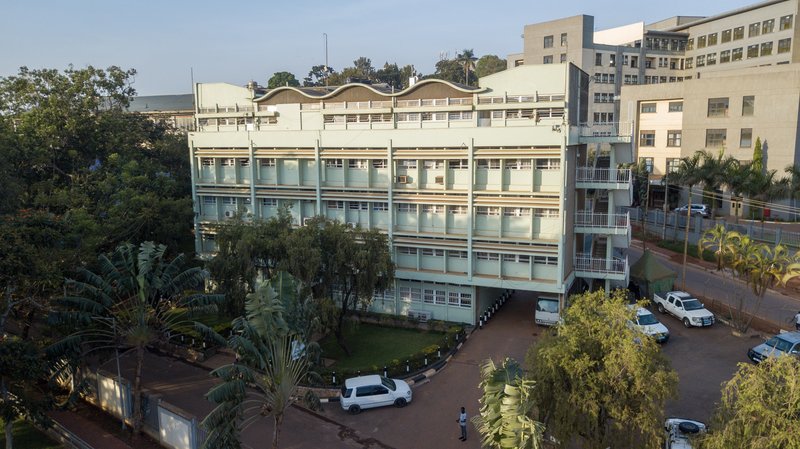
The Makerere University School of Public Health
Globally, university endowments have proven transformative. Institutions with robust endowments maintain excellence through economic cycles, attract top talent, and drive societal impact. For Makerere, a larger Endowment translates into greater institutional autonomy, enabling proactive rather than reactive contributions to national development.
In today’s context of recurring epidemics, climate change-driven disease emergence, and regional health threats, investing in the Endowment is a strategic national and regional security. Every shilling contributed helps ensure that when future outbreaks occur, Makerere-produced scientists will respond with even greater speed, innovation, and self-reliance.
A call to collective action
The tweet by the government spokesperson honoured these patriots. Now is the time for the rest of us — alumni, corporate partners, development agencies, philanthropic foundations, government stakeholders, and friends of Makerere — to equip the institution that trained, nurtured, and continues to inspire them.
Your support to the Makerere University Endowment Fund is the most sustainable way to say “thank you.” It honours past contributions while securing future ones. Whether through one-time gifts, regular donations, legacy bequests, or corporate partnerships, every contribution compounds over time to build a stronger Ivory Tower.
To donate, you can do so via the official platform at endowment.mak.ac.ug or join initiatives like the Makerere Marathon, alumni giving campaigns, or the Jawaher Fund for women’s education. Together, we can grow the Fund to levels that truly transform Uganda’s premier university.
The X post honoured those amazing men and women. Let us now invest in the institution that produced and continues to empower them, and the many who will follow.