
The MERIT Project, focusing on Environmental Risk Management and the Increasing Extremes and Uncertainty, is a five-university collaboration funded by the Norwegian Agency for Development Cooperation (NORAD) under the Norwegian Programme for Capacity Development in Higher Education and Research for Development (NORHED) programme.
Makerere University, this week, through the College of Agriculture and Environmental Studies (CAES), hosted a comprehensive impact review of the Environmental Risk Management Under Increasing Extremes and Uncertainty (MERIT) Project, bringing together faculty, researchers, students, and partners from Ugandan and Norwegian institutions. The discussions highlighted the transformational impact of collaborative research, student engagement, and capacity development in shaping policy, strengthening community resilience, and advancing Makerere’s contribution to national development.
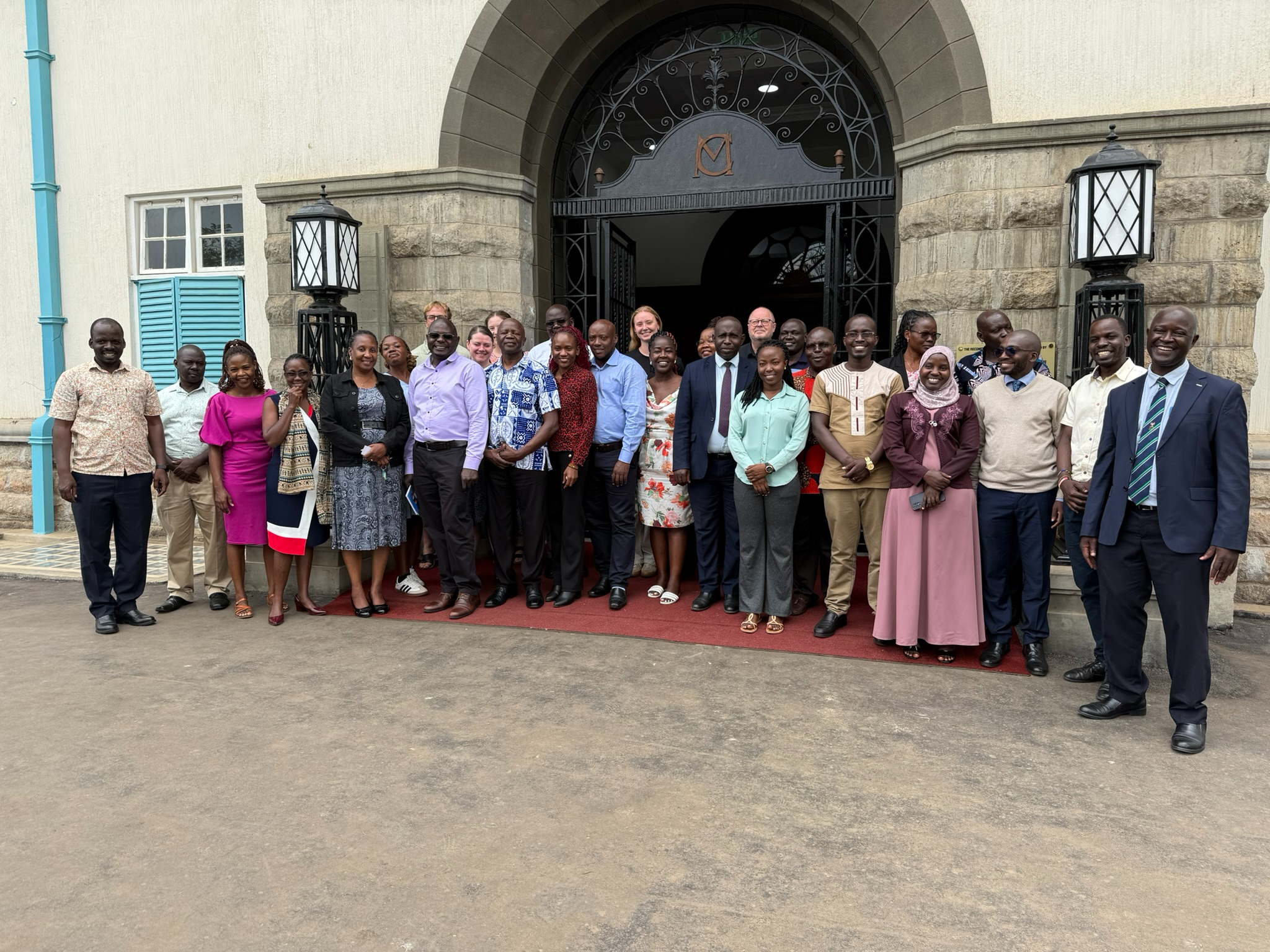
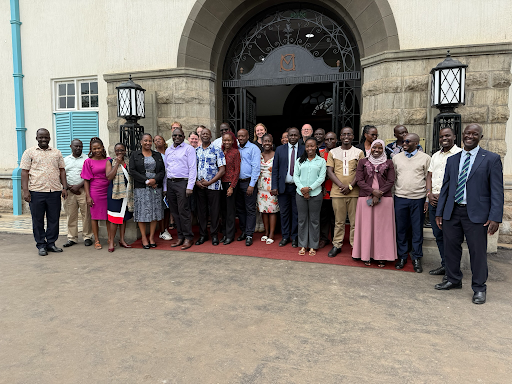
A group photo showing participants of the review meeting for the MERIT project in front of the Main Building.
A Cross-Continental Partnership Driving Change
The MERIT Project, focusing on Environmental Risk Management and the Increasing Extremes and Uncertainty, is a five-university collaboration funded by the Norwegian Agency for Development Cooperation (NORAD) under the Norwegian Programme for Capacity Development in Higher Education and Research for Development (NORHED) programme. The project, which runs from 2021 to 2026 (with a one-year extension due to COVID-related delays), seeks to enhance mutual collaboration between universities in Sub-Saharan Africa and Norway. The project grant is worth 20 million Norwegian kroner and is being implemented across four Universities, namely, Makerere University, Uganda Martyrs University, University of Dar es Salaam, and Haramaya University in Ethiopia, with a strong involvement of the Norwegian University of Science and Technology (NTNU) and the Western University of Science and Technology.
Its core components include:
-
Curriculum review and development
-
Staff and student training (Master's and PhDs)
-
Joint research and publications
-
Community-based environmental risk interventions
-
Student and staff exchange programs
-
SDG integration and gender mainstreaming
So far, 20 staff and 15 mainstream students have benefited from and participated in the project initiatives, with 13 Master’s and 2 PhD candidates progressing through specialised training in environmental risk management, geohazards, and disaster risk studies.
Student Research Driving Evidence-Informed Policy and Practice
The MERIT and NORHED-supported projects have empowered graduate students and early-career researchers at Makerere University to undertake cutting-edge research that directly informs Uganda’s environmental risk management agenda. Although the full findings are yet to be published, the projects have catalyzed important scientific inquiry in several key areas.
Some of the students are currently working on:
-
Improving environmental data and modelling to strengthen flood forecasting, hydrological planning, and climate-related risk assessment in high-risk regions.
-
Assessing disaster risk reduction practices at the local government level and examining how global frameworks such as the Sendai Framework and the SDGs are being implemented on the ground.
-
Exploring nature-based solutions, including sustainable approaches to land restoration, riverbank stabilization, and ecosystem protection.
-
Studying climate impacts on agriculture and food systems, with a focus on supporting vulnerable households and smallholder production.
-
Mapping urban ecological systems, including forest patches and carbon stocks, to guide sustainable urban planning.
-
Documenting community-led adaptation strategies and traditional ecological knowledge to strengthen locally grounded resilience approaches.
-
Evaluating the role of non-state actors, such as NGOs and community groups, in environmental risk reduction and recovery efforts.
Together, these research efforts are generating practical insights that can shape policy development, inform district and national planning, and strengthen community resilience. The projects are also building a new cohort of scientists equipped with the skills to bridge academic work with real-world environmental management challenges.
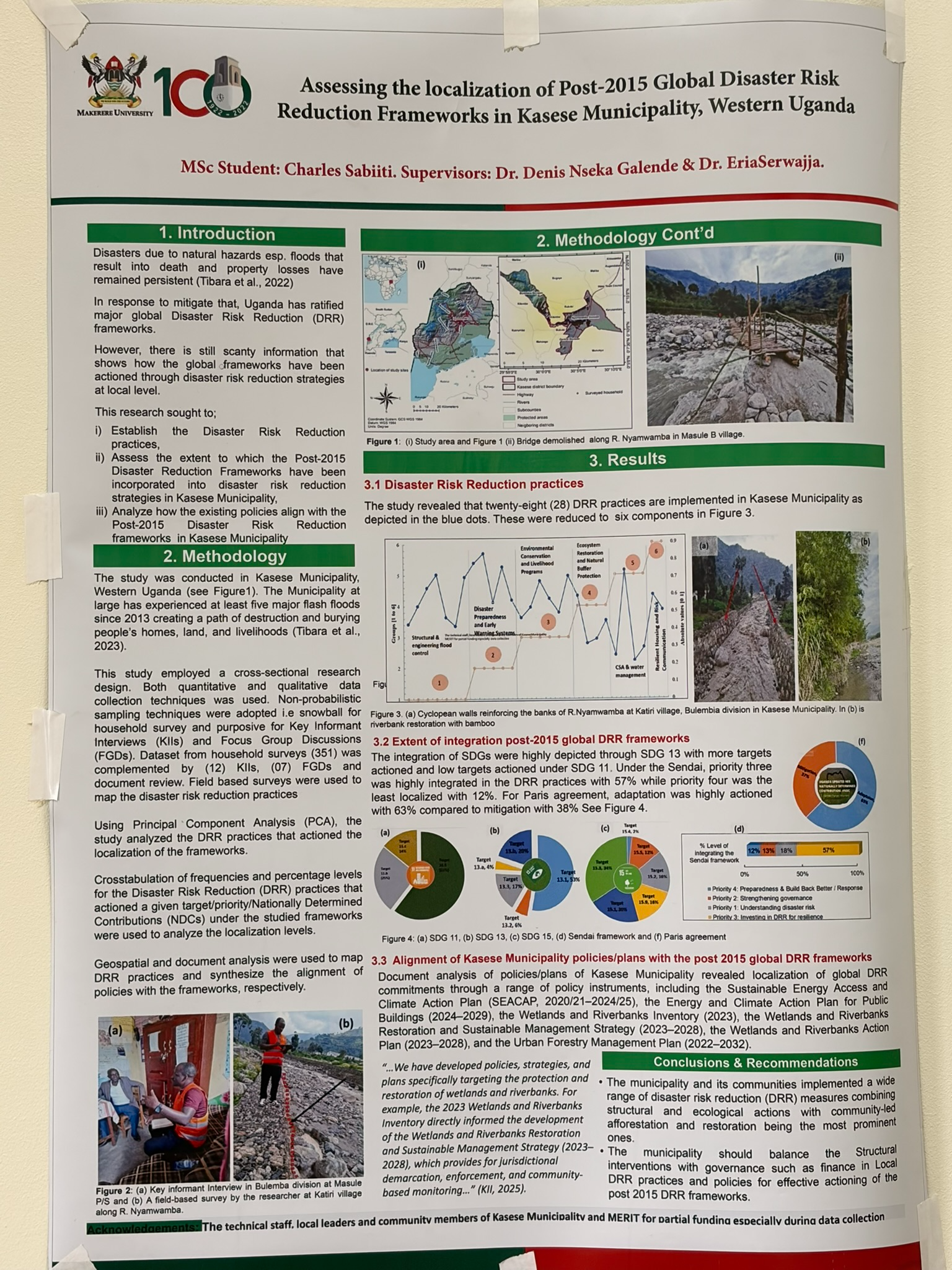
A photo of the synopsis of the research being done by one of the master’s students funded under MERIT at CAES.
Community Engagement and Local Knowledge at the Centre
The Environmental Risk Management component of the MERIT project has contributed to impactful knowledge and research vital for community interventions in highland and mountainous areas such as Mbale, Bududa, Sironko, and other districts that are prone to environmental risks, like landslides, flooding, and geohazards.
Key community-focused activities highlighted in the meeting included digitizing households in high-risk areas, using remote sensing and GIS to develop contextual warning systems, documenting and integrating traditional ecological knowledge, assessing community resilience and vulnerabilities, generating data for localized environmental risk planning. Such engagements not only strengthen community preparedness but also provide students with rich field experience and data for their research.
Student Exchanges and a Global Learning Experience
In an Interview, Prof. Harald Aspen,the Head of Department, Social Anthropology at NTNU, and Ms. Charlotte Nakakaawa Jjunja, the administrative co-ordinator of the project at NTNU, noted that, so far, five students from NTNU are currently undertaking research and internships in Uganda, immersing themselves in local challenges and contributing to joint innovations. Ugandan students have also benefited from exposure to Norway’s systems, creating a two-way flow of knowledge and experience.
They further noted that the exchange program, supported by the CostClim project under the Norpart project, helps students appreciate the complexities of implementing SDGs in diverse contexts, turning theory into practical, actionable insights.
Strengthening Makerere’s Institutional Capacity
Makerere University has benefited significantly from the MERIT collaboration. In his remarks, Prof. Yazhidi Bamutaaze, the Deputy Principal, CAES, noted that the College had acquired a Land Cruiser to support fieldwork, funding for curriculum review and SDG evaluation, support for gender mainstreaming initiatives, research funding for senior academic staff, enhanced visibility through joint publications and innovations, competence development trainings for college staff and students and co-supervision arrangements among others.
Such partnerships reinforce the University’s strategic commitment to cutting-edge research, global collaboration, and community impact.
Sustainability, Student Energy, and the Path Forward
A major segment of the meeting focused on the operationalization of sustainability principles across the University. Dr. Paul Mukwaya, the Head of Department, Geography at CAES, emphasized leveraging student enthusiasm, building sustainability clubs, and avoiding passive “mainstreaming” in favour of proactive sustainability actions.
Key recommendations included:
-
Training students on how to develop policy briefs
-
Ensuring every student project reflects the SDGs
-
Creating a central repository or map of all student work
-
Strengthening academic supervision to grow student confidence
-
Building systems that ensure research outputs influence actual practice
Dr. Mukwaya further highlighted the importance of student self-confidence, continuous reflection, and mentorship in shaping future academic and professional careers through the MERIT project.
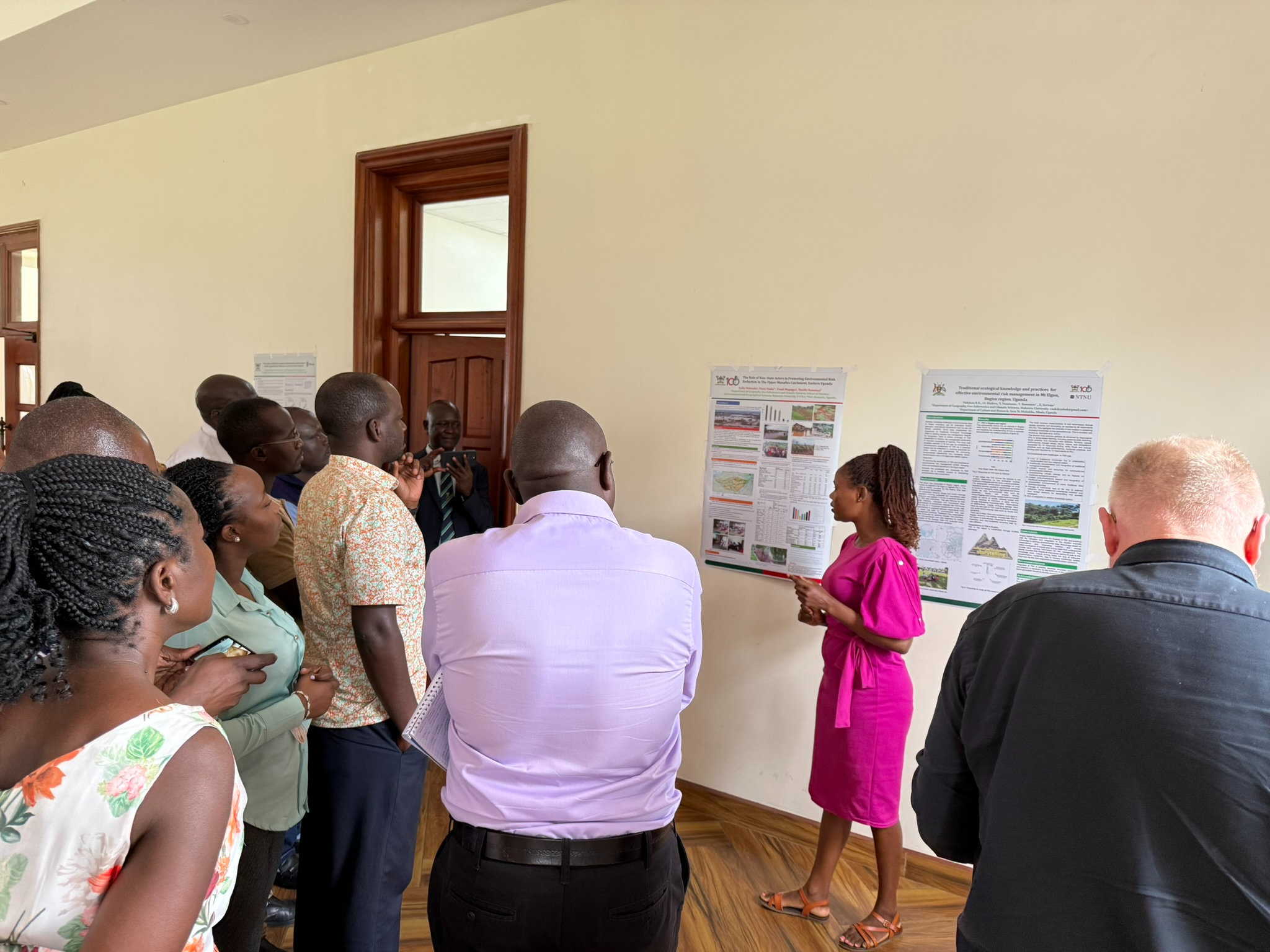
A photo of one of the student beneficiaries of the MERIT project making a presentation of her research findings.
Challenges and Opportunities
While the project has achieved significant milestones, several challenges remain, such as administrative and IT-related delays, balancing donor expectations with academic timelines and bureaucracies, maintaining strong collaborations across multi-university partnerships and ensuring sustainability initiatives are integrated and action-driven
Conclusion: A Growing Ecosystem of Impact
The review meeting affirmed that the MERIT and related research programs are not just academic exercises; they are shaping the future of environmental resilience, policy development, and capacity building in Uganda. The University’s commitment to student growth, collaborative innovation, and evidence-based policy influence underscores the central role Makerere continues to play in national and global development conversations.
As the project enters its final years, the focus now shifts to consolidating gains, scaling successful interventions, and ensuring that the research produced today continues to transform lives tomorrow.