Prof. Karyeija challenged young Africans to consider whether they will merely consume the future or create it, particularly in emerging fields such as artificial intelligence, robotics and digital technology.
Makerere University came alive today with the spirit of Kwame Nkrumah as students, leaders, scholars and alumni gathered for the 2026 Nkrumah Day Public Lecture under the theme, “Leadership, Self-Reliance & Transformation: Reimagining Nkrumah’s Vision for the 21st Century African Youth.”
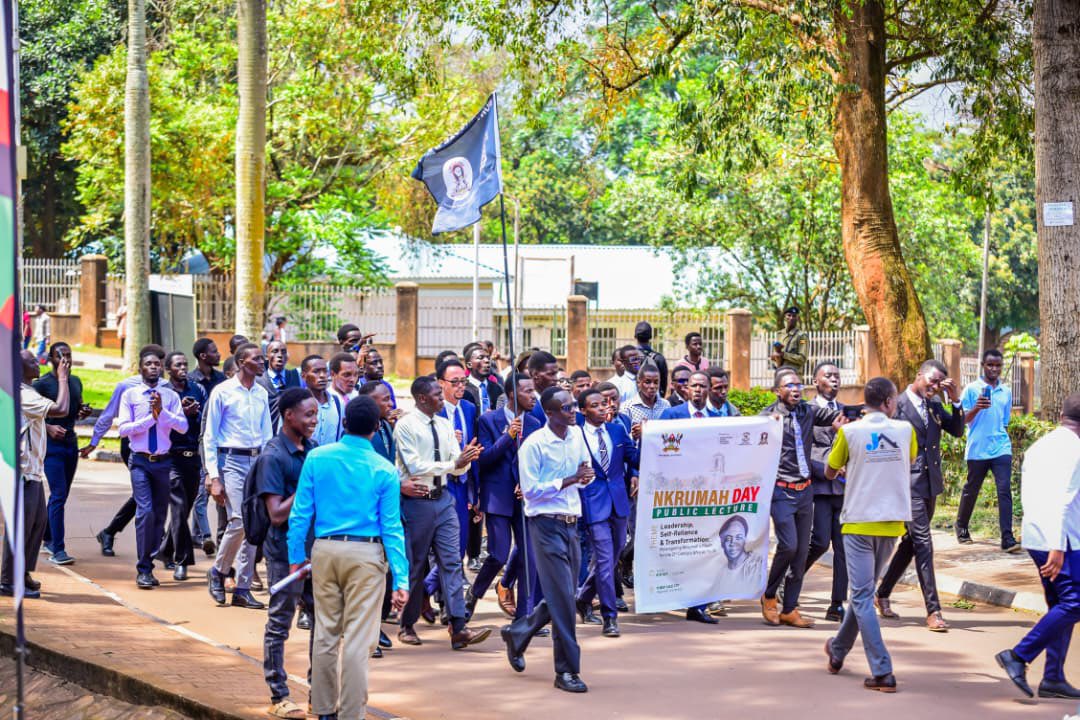
The atmosphere was electric from the outset, with current residents of Nkrumah Hall marching in procession to the lecture venue—a fitting reminder that, decades after Ghana’s first President and Pan-Africanist leader passed away, his ideas continue to find expression in new generations of African students, in this case, Ugandan students.
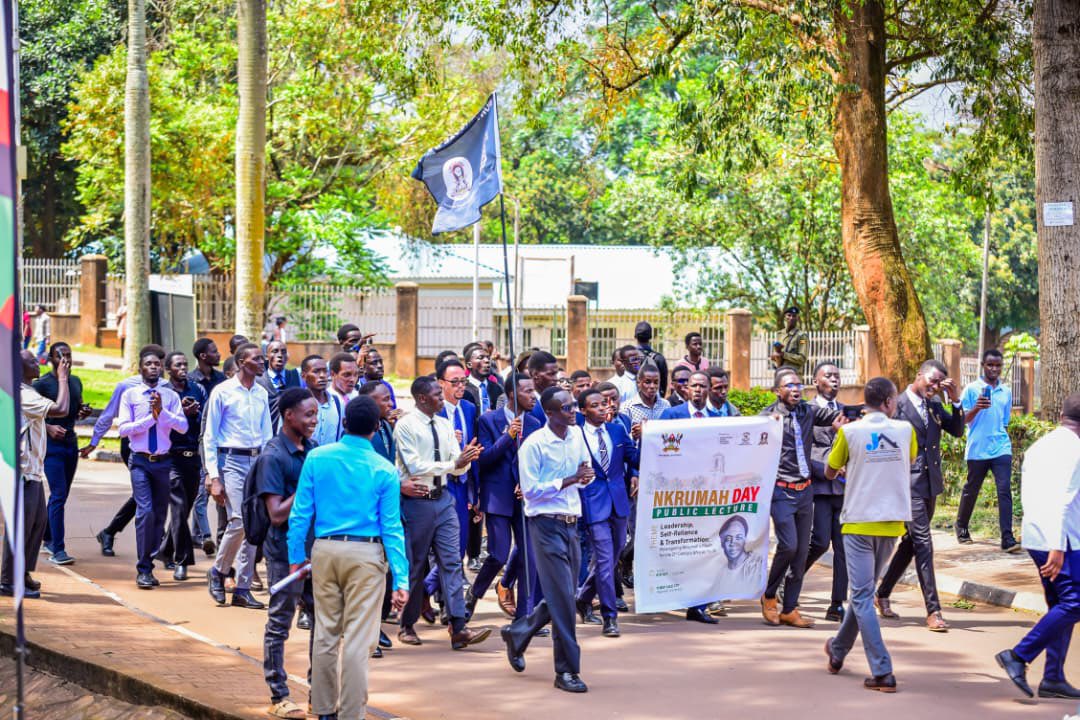
Current residents of Nkrumah Hall make their way to the lecture venue, carrying forward the spirit of “Forward ever, Backwards never!”
For alumni of Makerere, and particularly those who called Nkrumah Hall home, the occasion carried a deeper meaning. It was not simply a commemoration of a historical figure, but an invitation to reconsider what education, leadership and African identity should mean in the 21st century.
Beyond remembering Nkrumah: “We heard you”
Delivering the keynote address, Prof. Gerald Karyeija, Political Analyst and Head of Quality Assurance at the Uganda Management Institute, challenged the audience to move beyond admiring Nkrumah’s legacy and instead translate its principles into action.
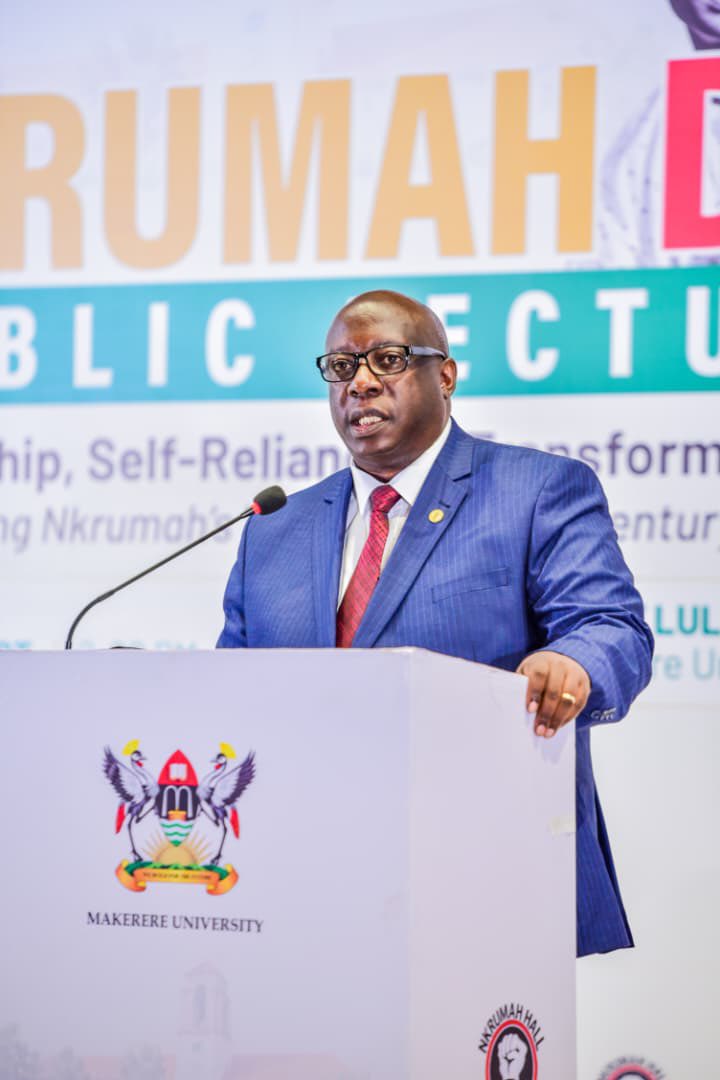
Prof. Karyeija argued that transformation is not only about systems, procedures and economic progress; it is equally about character.
Strong institutions, he noted, require integrity. Economic transformation requires ethical leadership, while public trust depends on responsible stewardship of the resources entrusted to leaders and citizens.
Drawing on Psalm 24, he reminded the audience that the earth and everything in it belongs to God, challenging Africans to see their talents, resources and opportunities as a trust to be managed wisely.
He also rejected the notion that Africa lacks what it needs to transform itself.
Across the continent, young Africans are already creating businesses, technologies, artistic works, scientific discoveries and social innovations. The challenge, he said, is to identify what is working, strengthen it, connect it and scale it, while improving or abandoning what is destructive.
For Makerere, this responsibility is particularly significant. The University, with its historic place in Africa's intellectual story, must not merely produce graduates. It must produce problem-solvers, creators and leaders committed to Africa’s transformation.
“Learn from the world, but also let the world learn from you,” was among the powerful ideas emerging from the lecture.
Prof. Karyeija challenged young Africans to consider whether they will merely consume the future or create it, particularly in emerging fields such as artificial intelligence, robotics and digital technology.
His message was ultimately one of responsibility: vision without execution remains empty aspiration. He called for five commitments from the new generation: Lead with integrity, build with confidence, decolonize the mind, africanize knowledge, transform with purpose.
And perhaps most importantly, he urged young people not to wait for permission to lead. Education must produce change-makers, he reiterated.
Representing the Vice Chancellor, Prof. Nabannoga Gorettie reinforced the University's responsibility to produce graduates who can think beyond employment and contribute to solving society's most pressing challenges.
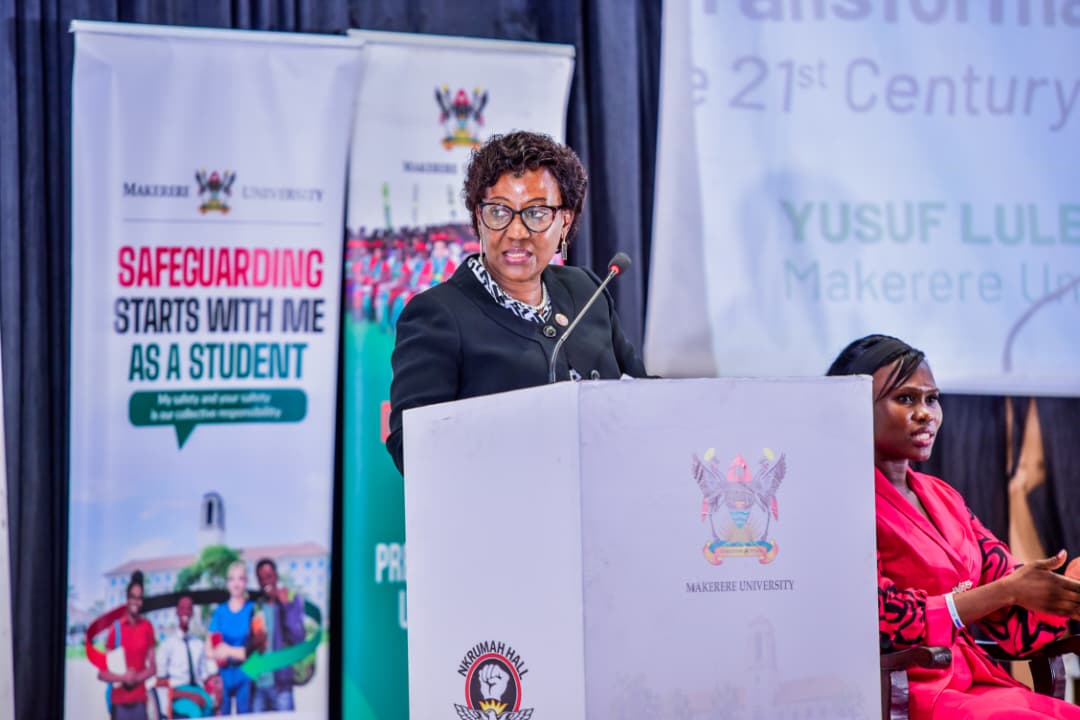
Prof. Nabannoga Gorettie represents the Vice Chancellor at the Nkrumah Day Public Lecture.
“A University builds for the future not simply by awarding degrees but by creating people who can creatively and critically think to solve problems for a nation, people who can create value and leadership rather than seeking for jobs, this is the kind of Africa Kwame Nkrumah dreamed of.” Prof. Nabanoga noted.
She further emphasised Makerere's responsibility to ensure that Africa becomes a place where ideas capable of changing the world are born.
“Africa must be a place where ideas capable of changing the world are born, and Makerere is at the centre of this responsibility.” she added.
Speaking on behalf of Makerere's student leadership, Dr. Winnie Kabumbuli, Dean of Students, described the theme as particularly timely.
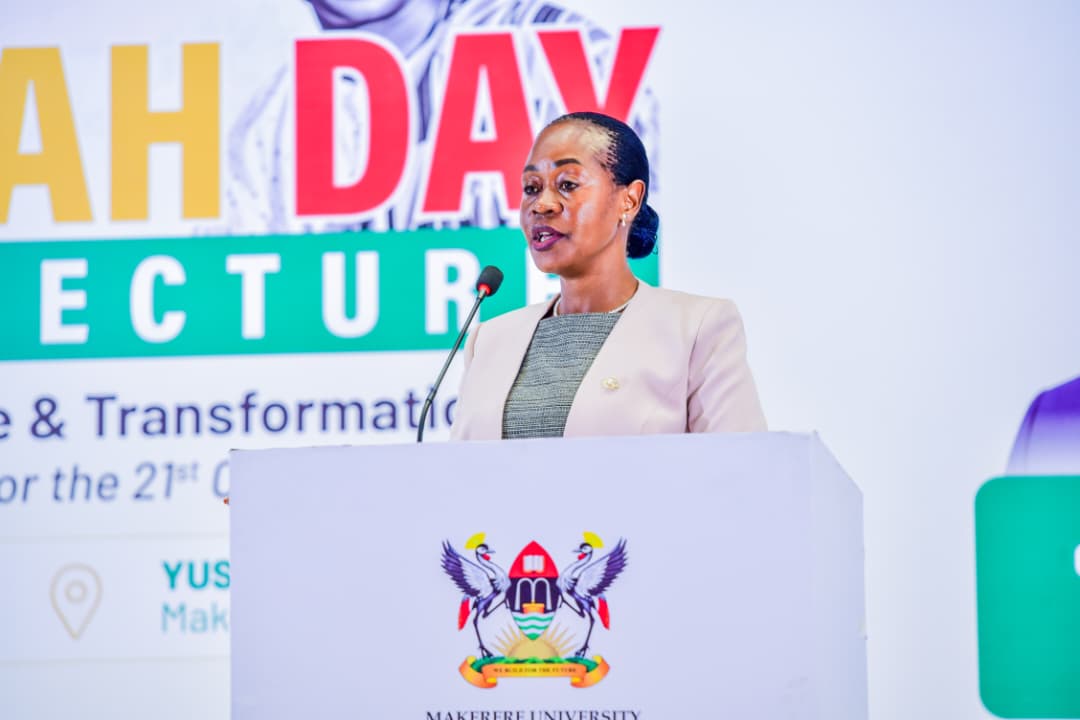
“We are proud to celebrate this event with a timely theme, as we reimagine Nkrumah’s legacy for the 21st-century generation.”
She connected the discussion to Makerere's research-led ethos and Nkrumah's vision of a stable, interconnected Africa, calling on the new generation to work towards patriotism, unity and transformation.
For Ssenkabira Joseph, Chairman of Nkrumah Hall, the responsibility begins with the individual.
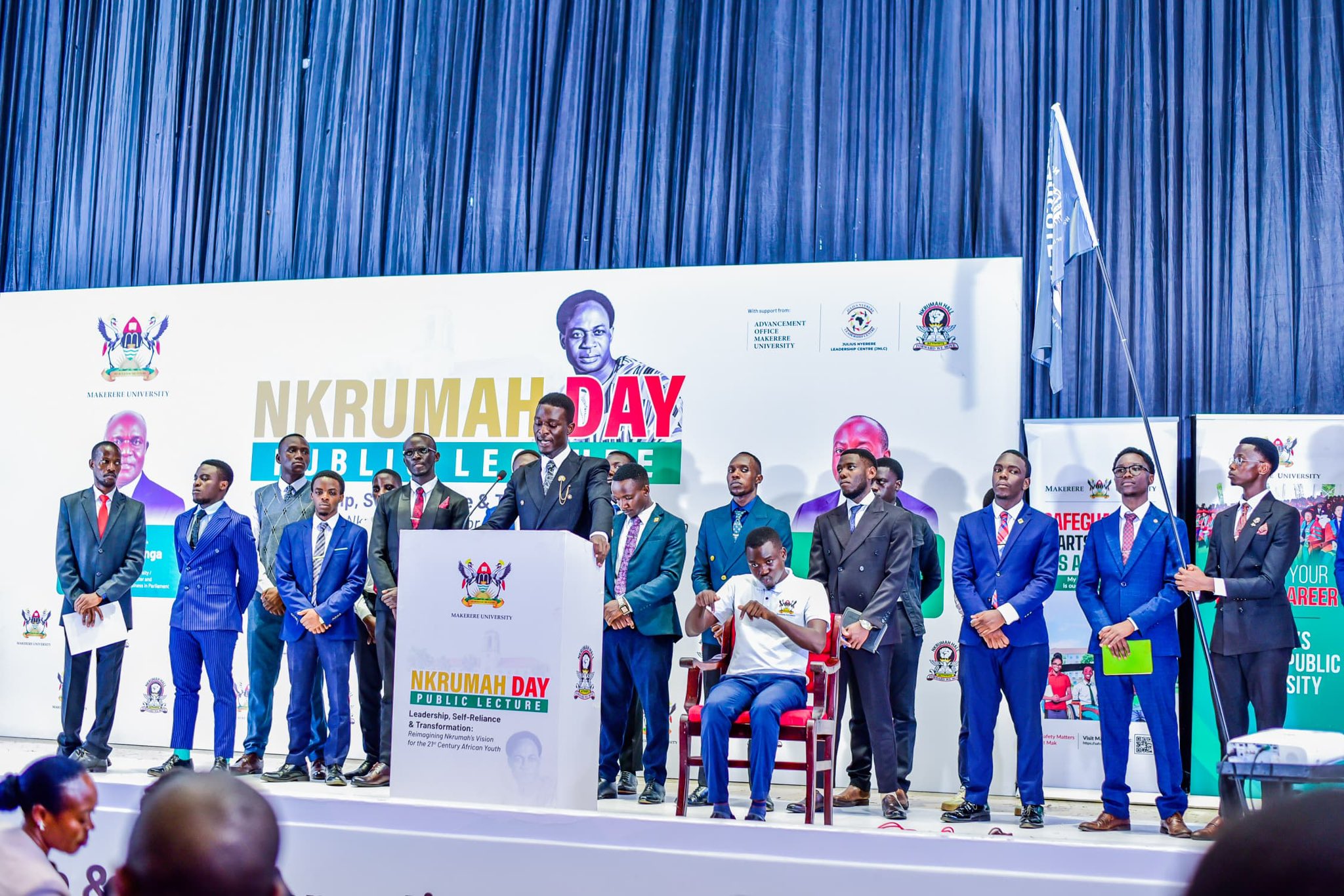
Ssenkabira Joseph, Chairman of Nkrumah Hall, and his SCR Cabinet address the audience during the Nkrumah Day celebrations.
“Forward ever, Backward never! This was Kwame Nkrumah’s mantra, which the gentlemen of Nkrumah Hall stand by!” Joseph noted.
He reminded students that leadership is not something reserved for a future moment when one becomes older, wealthier or more established.
“Leadership is not a title that will be handed over to you once you are grown, richer or ready, leadership is a personal responsibility handed over to each of us the moment we step into the walls of Nkrumah Hall.” He added.
He urged students to be active participants in the change needed to create the Africa Nkrumah envisioned.
A panel conversation that moved beyond the lecture hall
The panel discussion, moderated by NBS Live at 9 anchor Samson Kasumba, expanded the conversation from Nkrumah's historical legacy to the realities confronting Africa today.
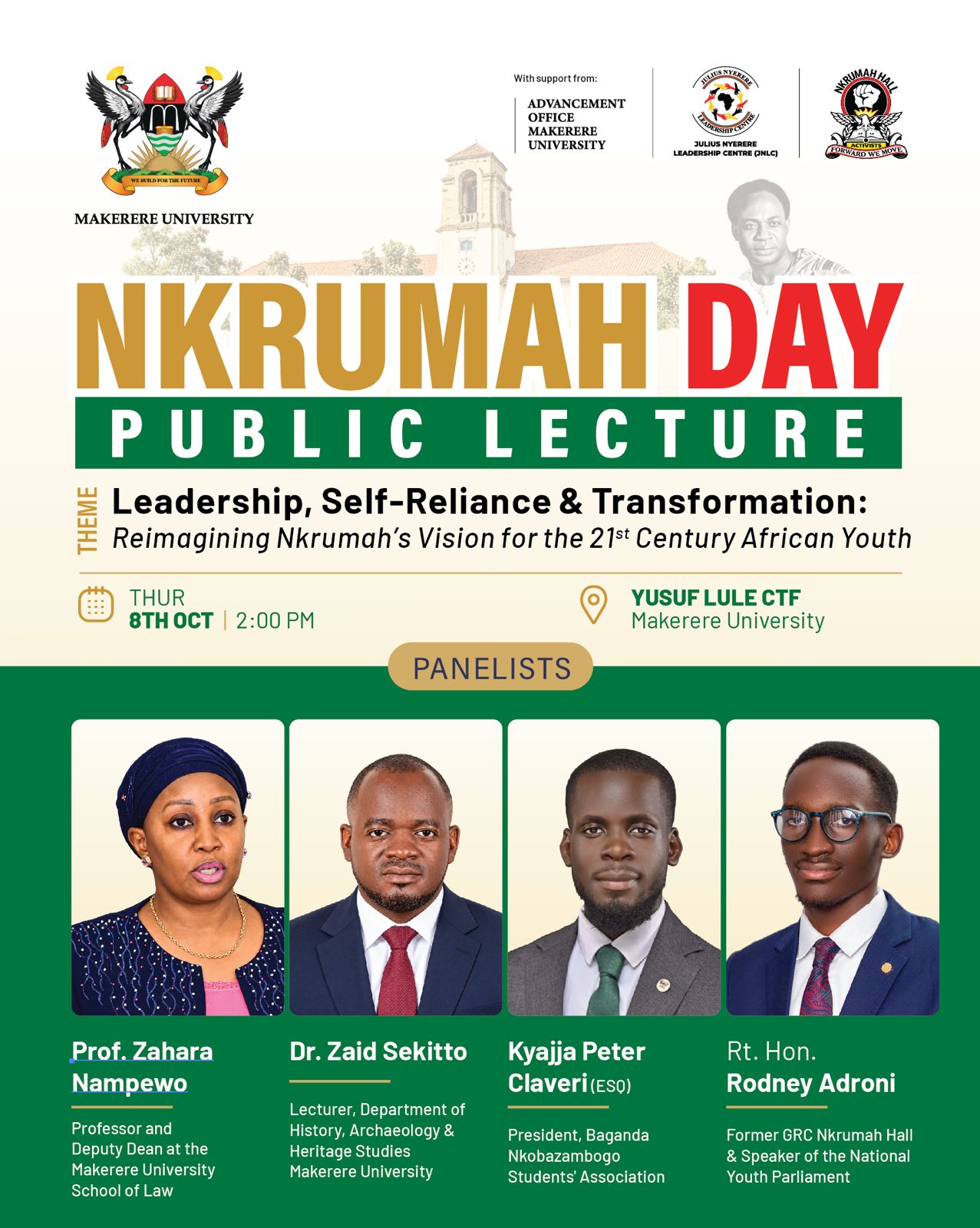
Panel discussion during the Nkrumah Day Public Lecture, moderated by Samson Kasumba.
The panel brought together Prof. Zahara Nampewo, Dr. Zaid Sekitto, Kyajja Peter Claveri (Esq) and Rt. Hon. Rodney Adroni, who interrogated education, Pan-Africanism, leadership, sovereignty, institutional responsibility and the role of young Africans in shaping the continent's future.
Prof. Zahara Nampewo challenged the education system to produce critical thinkers rather than graduates who simply reproduce what they have been taught. She argued that education should empower graduates to become actors and change-makers, whether by building businesses, supporting the informal sector, conducting research or applying their professional knowledge to everyday societal challenges.
Dr. Zaid Sekitto turned the conversation towards Pan-Africanism, arguing that Africa's political independence cannot be separated from economic, intellectual and cultural independence. He challenged contemporary African leadership to confront the colonial structures that remain embedded in many of the continent's institutions, including education.
Kyajja Peter Claveri, President of the Baganda Nkobazambogo Students’ Association, positioned student associations as potential “classrooms” for unity and synergy, arguing that smaller communities can serve as launchpads for wider African integration. Shared problems, he noted, can become the glue that brings people and communities together.
Rt. Hon. Rodney Adroni reflected on Nkrumahism, highlighting Nkrumah's foresight, ideological clarity and decisiveness. He argued that Nkrumah's warnings about neocolonialism and economic, cultural and intellectual dependency remain strikingly relevant today.
A question for Makerere alumni
Perhaps the most enduring message from today's lecture is that Nkrumah's vision cannot be left to history books.
His generation fought for political freedom for Africa. The responsibility of the present generation is to deepen that freedom through economic independence, intellectual confidence, technological ownership, strong institutions and African-led solutions.
And for the generations that have passed through Makerere, the question is particularly personal:
“ What have we done with the education, knowledge and opportunities we received?”
Nkrumah Day therefore becomes more than a celebration of a historical figure. It becomes a moment of accountability for students, academics, leaders and alumni alike.
Perhaps, then, the appropriate response to Nkrumah's enduring challenge is best quoted, saying,
“We not only remember you, but rather, we heard you.” As noted by Prof. Gerald Karyeija.