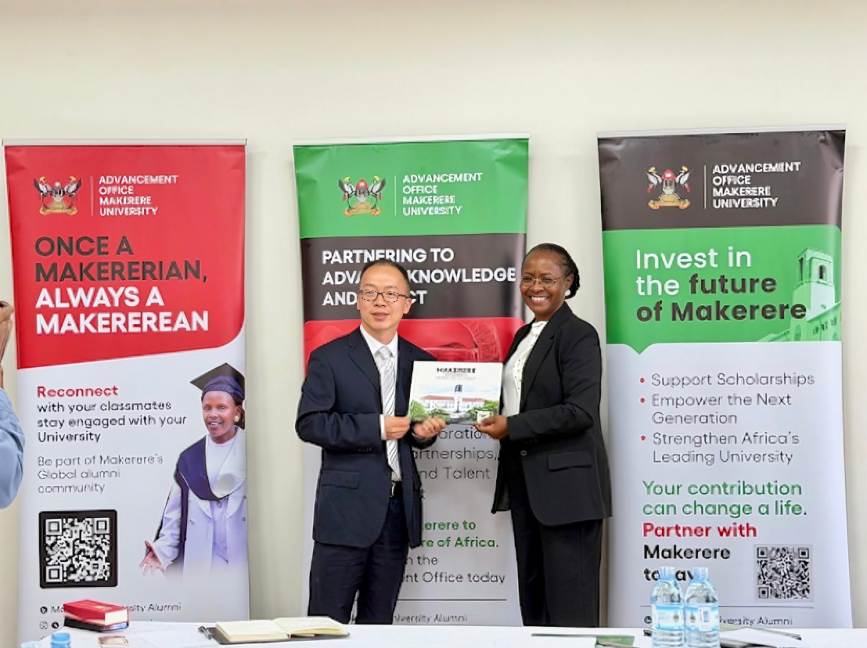

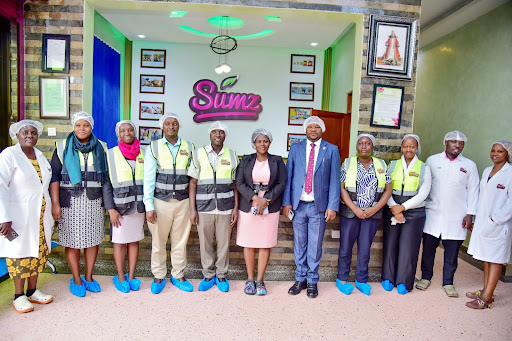
Discussions span internships, applied research, packaging design competitions, and co-creation with the University Innovation Pod.
On 2nd March, 2026, representatives from the Advancement Office, the College of Business and Management Sciences and the University Innovation Pod visited Psalms Food Industries to discuss a prospective partnership aimed at strengthening university–industry collaboration in manufacturing, research, innovation, and skills development.
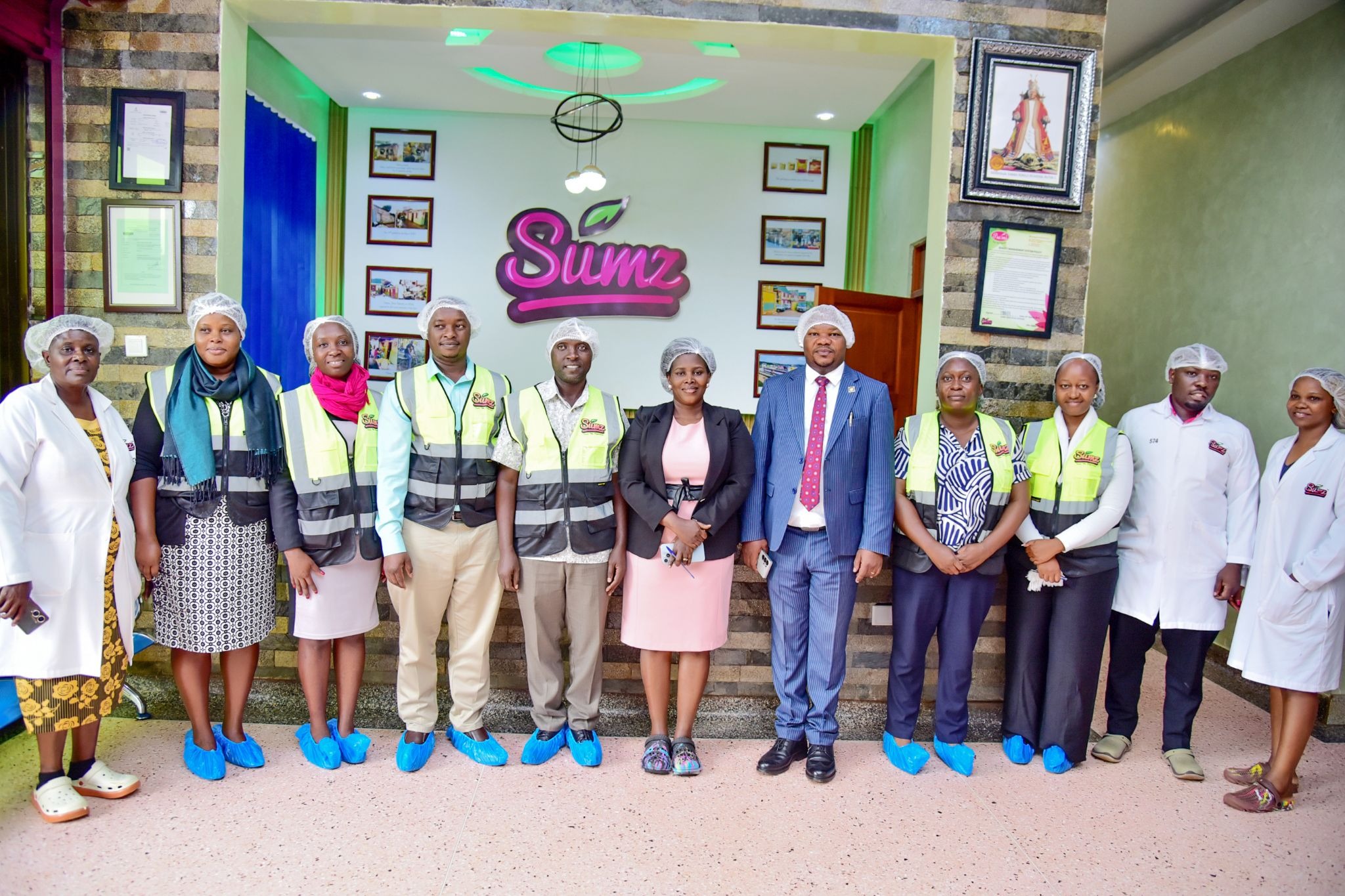
From the left: Ms Carol Nakawesa, Mr Paul, Ms Caroline Kainomugisha, Ms Hawa Ndagire, Dr. Denis Ngabirano, Ms Maureen Ngabirano, Dr. Jude Mugarura, Dr. Sendawula Kassim, Ms Annet Nakandi and Dr. Sarah Bimbona
Psalms Food Industries, a homegrown snacks innovation and manufacturing company, operates three major brands, namely, Sumz, Afrikan Harvest and Krunchables, which have grown to a range of 37 products and target the introduction of five new products annually. The company distributes products across Kenya, Rwanda, the Democratic Republic of Congo, South Sudan, and, recently, Tanzania. As a labour of love, the idea of producing snacks was born during the honeymoon of Mr and Mrs Ngabirano, who now run Psalms Food Industries side by side.
Dr. Denis Ngabirano, CEO and Co-Founder of Psalms Food Industries, during the meeting, described the company as “a snacks innovation house, with all our products developed in-house.” He noted.

Dr. Denis Ngabirano, CEO & Co-Founder, Psalms Food Industries giving his remarks
He emphasised the company’s commitment to quality assurance and consumer-centred research, noting that Psalms conducts surveys and gathers customer feedback to inform product development, supported by an internal microbiology and chemistry laboratory.
Dr. Denis Ngabirano noted that the company had only recently introduced two brands, “Afrikan Harvest for it’s health concious clientele and Kruchables for it’s volume centric clientele.
“Afrikan Harvest has no additives, it is a brand for health-focused consumers,” he explained, while highlighting the differentiated positioning of their product lines. “Sumz is our premium brand, and Krunchables focuses on volume.”
Student-Centered Experiential Learning
A key focus of the meeting was structured experiential learning for students across disciplines. Potential areas of collaboration include internships, graduate trainee pathways, and hands-on exposure within Psalms’ incubation and production facilities.
The proposed engagement spans multiple fields, including environmental sciences, engineering, procurement and logistics, finance and accounting, quality control, production and manufacturing, human resource management, marketing, and international business.
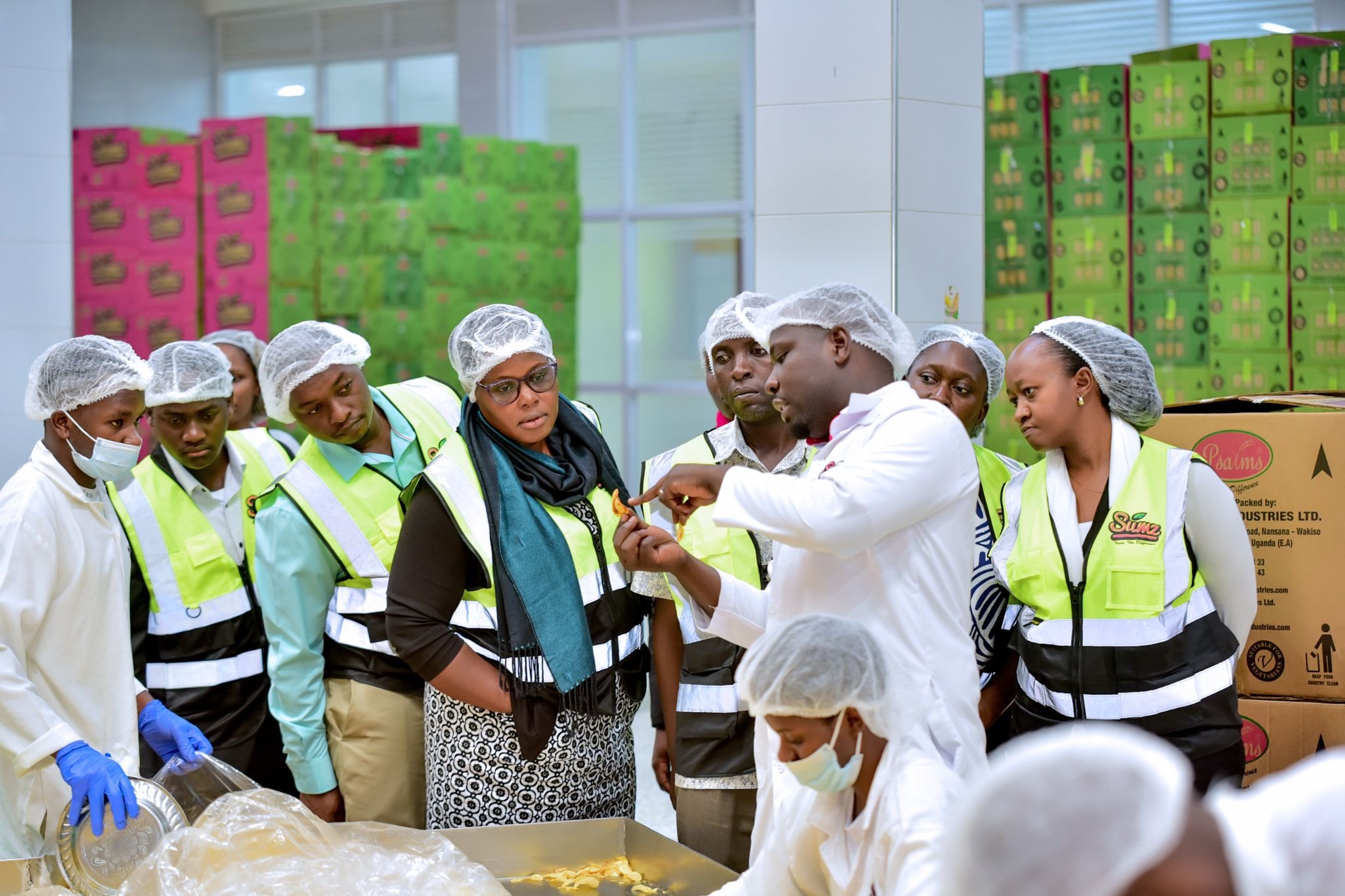
Mr Paul, Quality Assurance Manager, Psalms Food Industries, as he leads the visiting delegation on a factory tour.
The partnership could provide students with direct exposure to real-time production systems, standard operating procedures (SOPs), and quality assurance frameworks, strengthening the practical relevance of their academic training.
Among the innovative ideas discussed was a potential competition involving students from the Fine Art and Industrial Design disciplines to redesign packaging for selected Sumz products. The proposal would allow top designs to be commercially adopted, creating a direct bridge between creativity, intellectual property development, and industrial application.
Research, Innovation and Commercialisation
Both institutions expressed interest in joint applied research initiatives, particularly in process optimisation, data analytics for manufacturing efficiency, product improvement, and sustainable production systems.
Opportunities were also discussed around collaborative research in machine design, crop development for snack processing, and factory energy solutions, areas that not only benefit Psalms but have broader implications for Uganda’s manufacturing sector.
The engagement further highlighted potential linkages with the University’s innovation and commercialisation structures, including the University Innovation Pod (UNIPOD), to support co-creation and scaling of student-led innovations.
Mr Awel Uwihanganye, Chief Advancement Officer at Makerere University, proposed strengthening the engagement through structured programming, including a planned collaboration between the University’s innovation Hub and the upcoming incubation Hub at Psalms Food Industries, particularly to support the commercialisation of research outcomes for both students and staff.

Mr. Awel Uwihanganye, Chief Advancement Officer, Makerere University making his remarks during the meeting
Curriculum Co-Creation and Staff Exchange
Beyond student placements, discussions also focused on co-developing academic content that responds more directly to industry needs, particularly within the manufacturing value chain.
Proposals included guest lectures by industry practitioners, staff exchange programmes to expose academic staff to factory operations, and tailored short courses for Psalms staff based on identified skills gaps.
Dr. Jude Mugarura, Head of the Department of Marketing and Management at COBAMS, emphasised the importance of embedding the partnership within academic programming. He proposed “internships for students in HR, marketing, international business, accounting and finance,” as well as staff exchanges to give University staff hands-on exposure to manufacturing operations.

Dr. Jude Mugaurura, Head of Department, Marketing and Management, COBAMS
He further suggested specialised courses tailored to the factory’s needs and attachment of research students interested in manufacturing. Such collaboration would contribute to curriculum responsiveness and ensure that graduates are equipped with market-relevant competencies.
Strengthening University–Industry Linkages
The engagement reflects Makerere University’s continued commitment to strengthening partnerships that bridge knowledge generation and real-sector application.
Both institutions expressed a shared vision of building a structured, mutually beneficial collaboration that integrates research, innovation, skills development, and enterprise growth, positioning the University as a key knowledge partner in Uganda’s manufacturing transformation.
Discussions remain ongoing as both parties refine priority areas for formalisation.