
Seven approved certificate courses and Training of Trainers on World Bank standards will build national capacity for sustainable development investments.
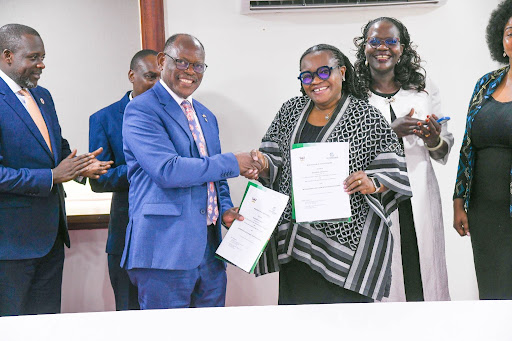
On 5th March 2026, Makerere University signed a Memorandum of Understanding (MoU) with the International Development Association (IDA), the financing arm of the World Bank Group, establishing a strategic partnership aimed at strengthening environmental and social sustainability systems in Uganda and the wider East African region.
The collaboration brings together Makerere University through the College of Agricultural and Environmental Sciences (CAES) and the College of Humanities and Social Sciences (CHUSS) and the World Bank to jointly advance training, research, and policy advisory in environmental and social sustainability.
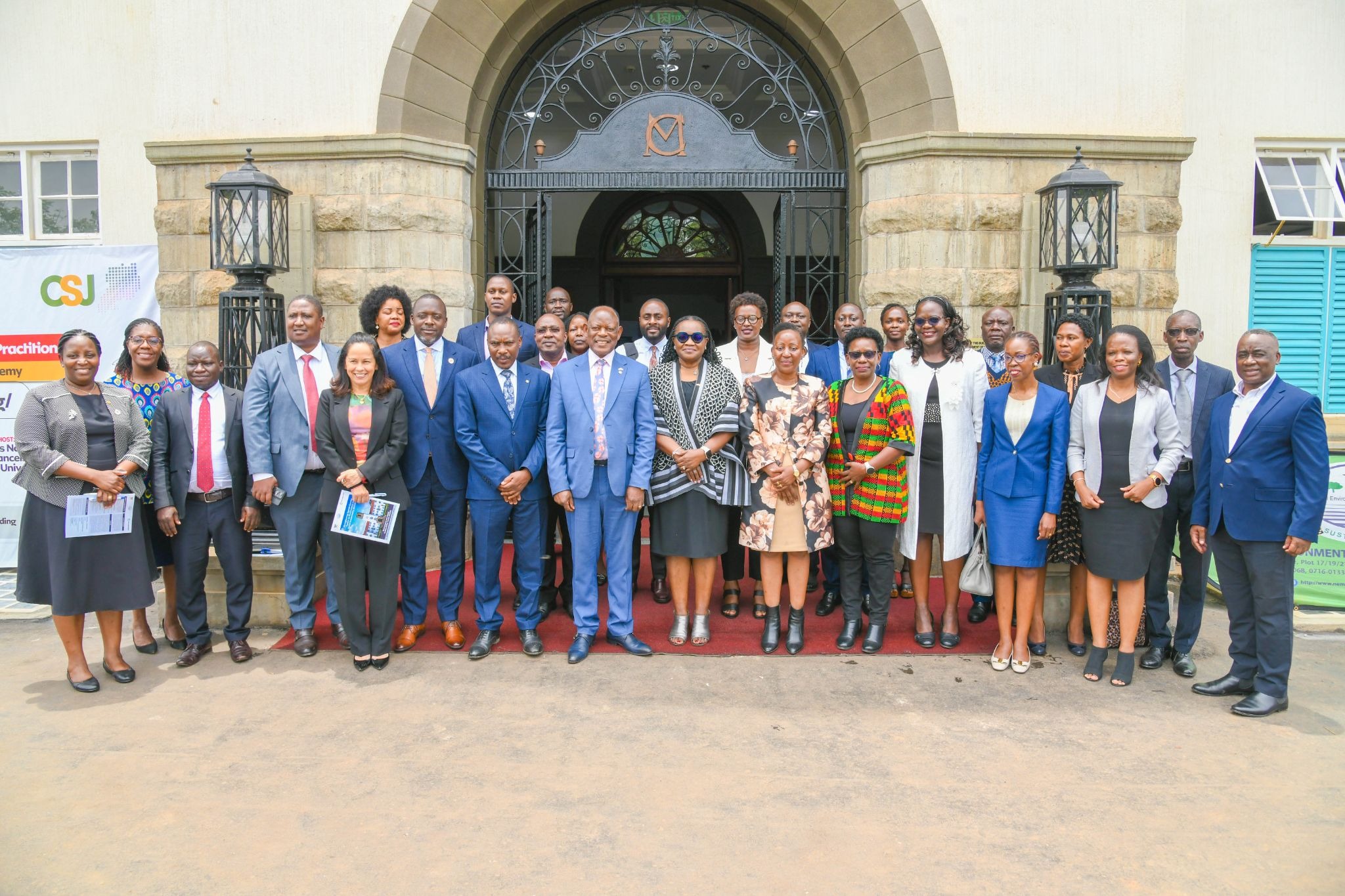
A group photo of representatives from various partners at the MOU signing
The three-year agreement provides a framework for cooperation focused on building national capacity to manage environmental and social risks associated with large-scale development investments.
Advancing Sustainable Development through Knowledge Partnerships
The partnership will be anchored in the Environment and Social Sustainability Centre (ESSC) at Makerere University, a national hub established to promote applied research, policy engagement, and professional training in environmental and social governance.
Through the Centre, the two institutions will collaborate to strengthen Uganda’s ability to plan and implement development projects in ways that safeguard communities and the environment.
Speaking during the signing ceremony, Ms. Francisca Ayodeji (Ayo) Akala, the World Bank Country Manager emphasised that the collaboration reflects a shared commitment to strengthening systems that support sustainable growth.
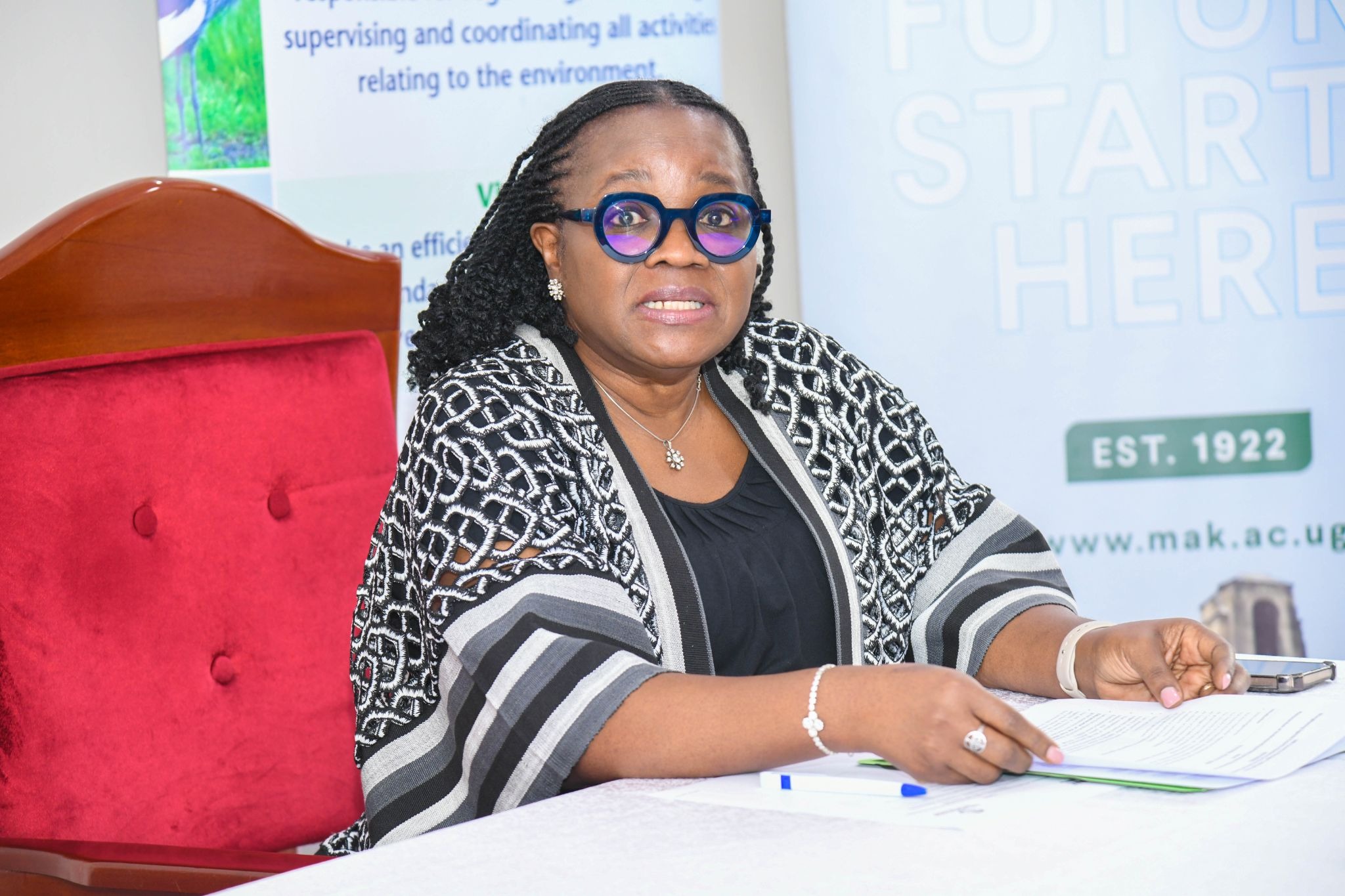
Ms. Francisca Ayodeji (Ayo) Akala giving her remarks during the MOU signing
“This partnership with Makerere University is an important step in strengthening Uganda’s systems for environmental and social sustainability. By working through the Environment and Social Sustainability Centre, we aim to build the capacity of professionals across government, the private sector, and development institutions to better manage environmental and social risks and deliver investments that promote sustainable growth while protecting people and the environment.” Ms. Francisca Ayodeji (Ayo) Akala, World Bank Country Manager, Uganda, noted.
The partnership will support training, research, and policy advisory activities through the ESSC, helping Uganda pursue a development trajectory that promotes economic growth while protecting people and the environment.
Building National Capacity for Environmental and Social Risk Management
Uganda’s development agenda under the Fourth National Development Plan prioritises large-scale investments in infrastructure, agro-industrialisation, energy, and science and technology. However, such investments require strong environmental and social risk management systems to ensure sustainable outcomes.
The new partnership, therefore, focuses on building a skilled workforce capable of applying international best practices in environmental and social governance.
Under the MoU, Makerere University will design and deliver demand-driven short-course training programs targeting public sector officials, development practitioners, financial institutions, civil society organisations, and private sector actors implementing major projects.
Seven certificate-level short courses have already been developed and approved across multiple colleges at the University. These courses cover areas such as environmental and social risk management, climate risk assessment, construction health and safety, and integrating environmental and social considerations into investment cycles.
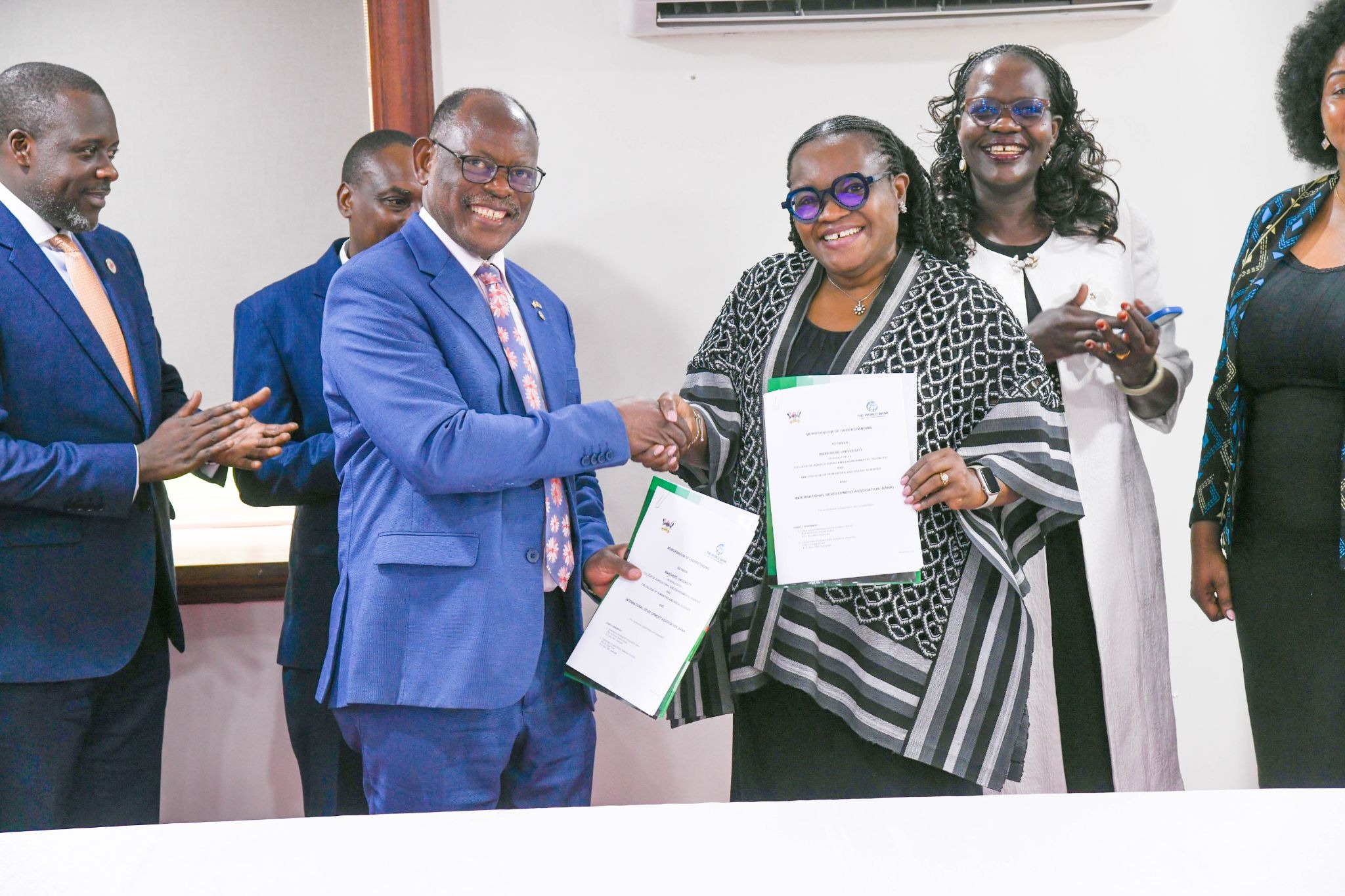
Prof. Barnabas Nawangwe and Ms. Francisca Ayodeji (Ayo) Akala after signing the MOU.
“Makerere University is proud to partner with the World Bank in strengthening Uganda’s capacity to manage environmental and social risks in development investments. Through the Environment and Social Sustainability Centre, we have already developed and approved seven certificate-level short courses across multiple colleges, designed to equip professionals in government, the private sector, and development institutions with practical skills to plan and implement sustainable projects. This collaboration reflects Makerere’s commitment to providing knowledge-driven solutions that support Uganda’s development while safeguarding communities and the environment.” Prof. Barnabas Nawangwe noted.
Strengthening Collaboration between Academia and Development Partners
As part of the agreement, the World Bank will support the development and delivery of the training programs, including conducting Training of Trainers (ToT) on the Bank’s Environment and Social Standards and international best practices.
The Bank will also leverage its convening power to encourage participation from development partners, government institutions, and project implementers, while supporting impact monitoring of trained professionals to document improvements in project performance and job creation.
The collaboration will further promote professional networking, policy dialogue, knowledge exchange, and the development of knowledge hubs containing environmental and social tools, databases, and resources for practitioners.
Positioning Makerere as a Regional Knowledge Hub
Through this partnership, Makerere University seeks to position the Environment and Social Sustainability Centre as a leading knowledge hub for environmental and social governance in Africa.
By combining academic expertise with the World Bank’s global experience in development financing and technical assistance, the initiative is expected to strengthen the institutional capacity required to deliver sustainable and climate-resilient investments in Uganda.
The partnership also aligns with the World Bank’s broader commitment to supporting Uganda’s development agenda and strengthening country systems for environmental and social sustainability.
Together, the two institutions aim to equip professionals across government, the private sector, and development organizations with the skills required to ensure that Uganda’s development pathway remains inclusive, responsible, and environmentally sustainable.