
When one Nigerian student joined Makerere, he found out that the food was not like that back home. That led to weeks and months of trying different ways to get the taste of his local cuisine until he found he had gone looking for it too far.
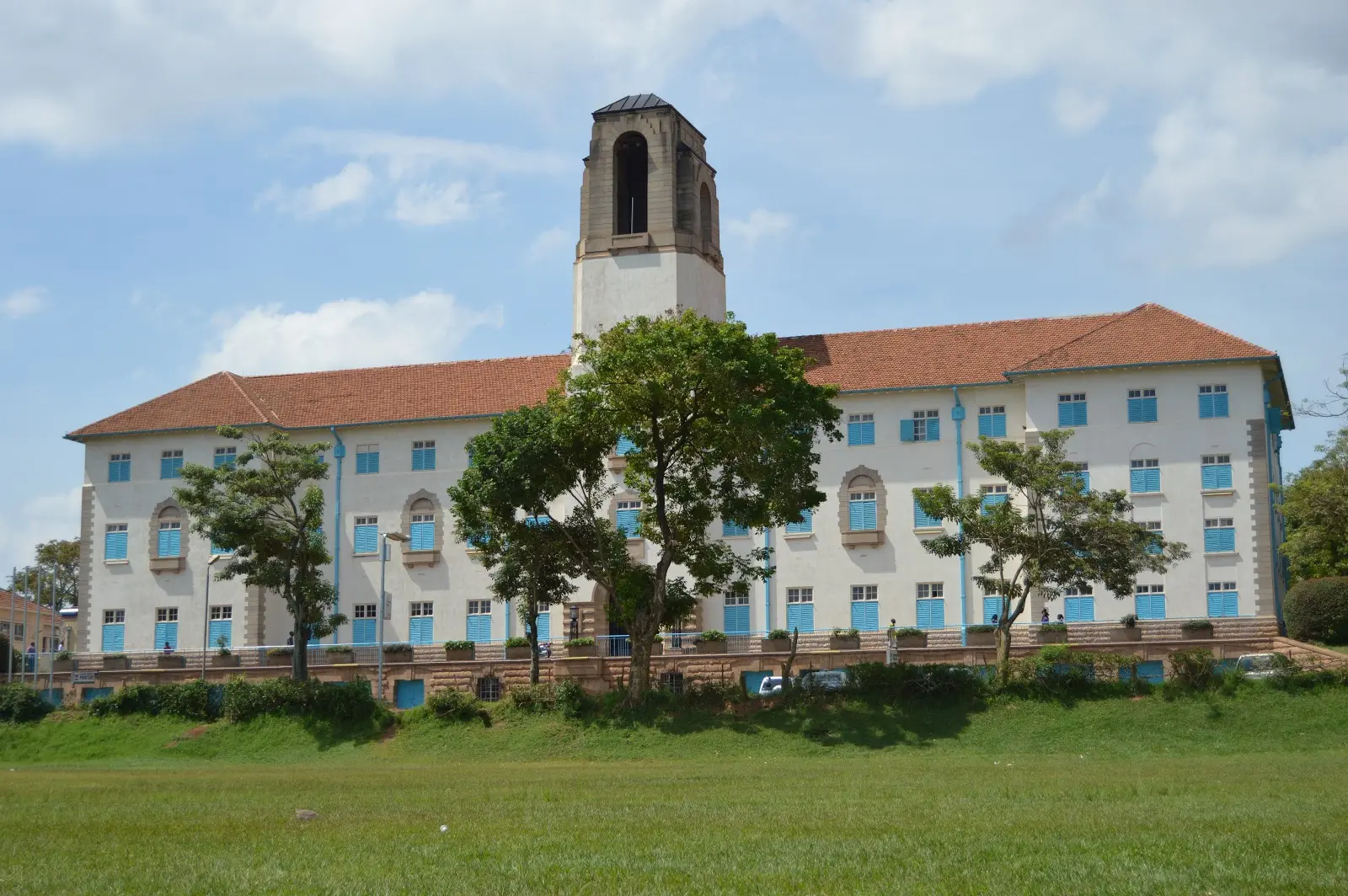
In January 2026, I left Nigeria for the first time to come and study at Makerere University in the Interdisciplinary MPhil/PhD programme in Social Studies at the Makerere Institute of Social Research (MISR).
Although I was told to bring as much Nigerian food as possible, I did not really expect Uganda to be so different from Nigeria, especially regarding food. However, upon my arrival at MISR, I began to understand why I had been given such advice, beginning with the lunch served there.
It gradually dawned on me that Uganda and Nigeria are worlds apart when it comes to food. For example, none of the different types of rice here is quite the same as those in Nigeria. The way the rice is prepared makes it even more different. The same goes for almost all the other foods, including beans and vegetables. I had to start getting used to pilau, matooke, posho, g-nut paste, and other foods. Nakati, dodo, eggplant leaves, and spinach were among the most common vegetables. Pepper seemed almost absent from the menu, and the seasonings tasted different. This is not to say that onion, tomatoes, okra, and some other vegetables and fruit are not the same as those in Nigeria, but the difference is how they are prepared or what they are eaten with.
The search for Nigerian food
Even though I eventually brought some Nigerian food with me, it was impossible to come along with palm oil, since liquids are not allowed in flight baggage. This and other factors delayed my proper cooking of Nigerian food until I found out where to get palm oil, but even then, the palm oil tasted different. Everything was different. Only two options were available. One was to go to restaurants or markets that sold Nigerian food. However, the challenge was the expensive prices and the relative distance. The second option was to get used to Ugandan delicacies. I opted for the latter, and it was only then that I could transform myself into both a Nigerian and a Ugandan at the same time.
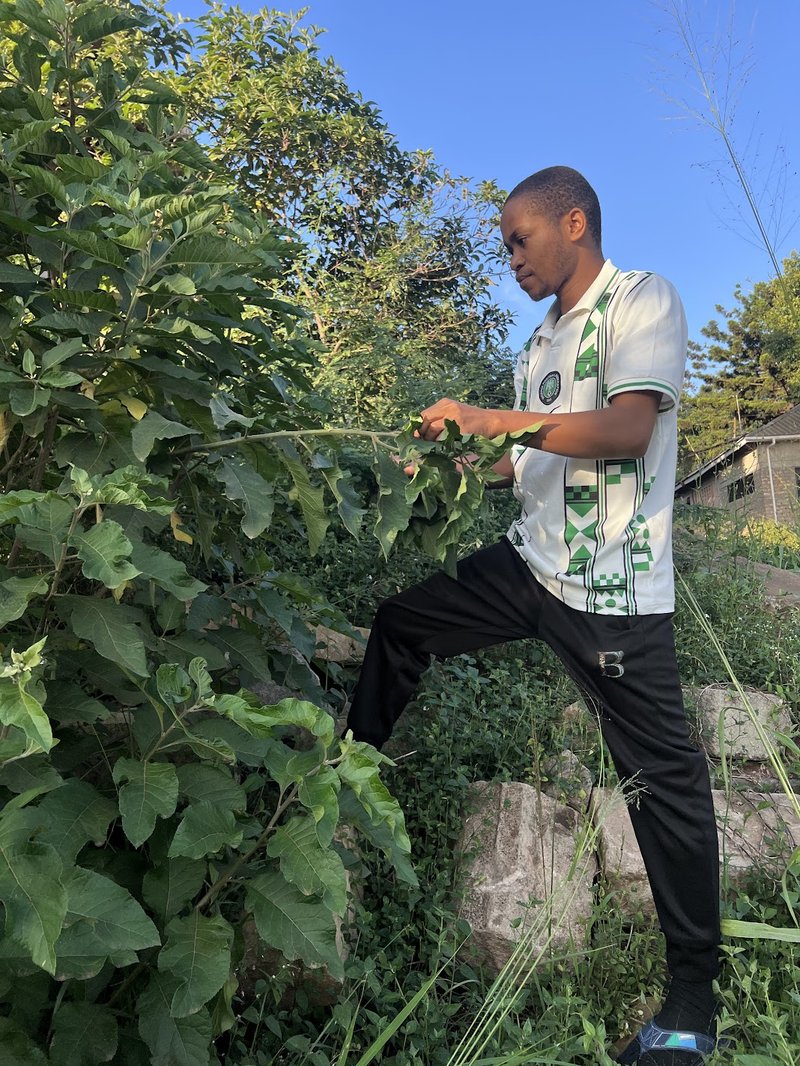
As I was getting used to Ugandan dishes, I was also becoming more acclimatised to the general university and city environment. It was around this time that a non-teaching staff member at MISR, perhaps because of the Nollywood influence, wanted to know whether I had been cooking Nigerian food. As we spoke, she told me of the presence of bitter leaf plants on the campus. This was in March 2026. I doubted what she said because I had already been told that some of the vegetables commonly used in Nigeria were unavailable, especially fluted pumpkin leaves and bitter leaves. Then she took me to the two locations where bitter leaf plants could be found, behind the Makerere police station and in front of the Julius Nyerere Leadership Centre. It was truly a surprise to finally see them!

Ugwu picking a bitter leaf on university campus
I worried however, that if I went to pluck the bitter leaves at the Leadership Centre, I would be violating the flower (as the plant was a part of the flowery decorations there). I feared for nothing; the workers at the centre were very welcoming and told me I could always get the leaves whenever I wanted. This was a relief because the plant behind the police station was too tall and required climbing, which I was not ready to attempt.
The irony is that Ugandans do not really use bitter leaves as vegetables for food. Instead, they use the leaves mostly for medicinal purposes. In Nigeria, however, the leaves are used both medicinally and as food. In fact, a very popular soup among the Igbo people of Nigeria is ofe onugbu (bitter leaf soup). This is why I found it rather puzzling when my friends would joke about how I prepared and ate “herbs.” They would not even taste it. Nevertheless, a few of them eventually tasted and liked it, especially my Kenyan friend, Wambua Muindi, who had lived with Nigerians in Belgium and was already making and eating garri with ofe ogbono in Nairobi, long before I even met him.
The joy of finding a lot for free
I occasionally go out with Muindi and another friend Pint Ndite, to enjoy nature and refresh our minds as a way to relax from the heavy reading load at MISR. So, one evening in April 2026, Ms Ndite drove us to the Food and Nutrition Department. We went to the extreme end of Makerere that side and sat on the green grass, facing the setting sun and the exquisite landscape.

Ugwu enjoying the bitter leaf soup together with posho
As we chatted and enjoyed the moment, the pleasant scent of baking bread wafted past our nostrils, and we began to wonder where it was coming from. We went to check one of the buildings, supposing the aroma was emanating from there, but we were directed instead to the bread factory behind us. So we went to get the bread, but upon returning, I saw something that tempted me to think of it as a “discovery,” you know, the sort of discovery Europeans believed they had made! Guess what? Just adjacent to the bread factory, around the unfinished building close to the College of Engineering, Art, Design and Technology, I saw a cluster of bitter leaf plants. No, it was more than that, it was a “Bitter Leaf Republic”! I was awestruck as I pointed at the green leafy plants, while my two friends looked on in surprise.
Ever since I discovered this republic, I have felt, to a great extent, at home. I began to understand how deeply connected human beings are to the food they grew up eating. In any case, let the Ugandans and other Makerereans who are unfamiliar with this vegetable continue to see it as mere bush, and let my Nigerian brothers and sisters, or whoever else sees it as food, be aware of this republic, and everything it offers!