
As was the norm for best-performing students then, Alinaitwe secured government sponsorship for his O-Level studies at Kigezi College Butobere, whereupon, excelling, he secured additional government sponsorship for his A-Level studies at Namilyango College. There, he emerged as the best overall student in the country.
The death of Princess Diana in a Paris car crash in August 1997 was nothing short of shocking. When the news broke, millions around the world remained glued to their screens hoping that it was a bad joke, but it wasn’t. For those that were in the United Kingdom then, the sombre mood was almost palpable. It was hard to turn away from the constant updates and tributes on TV.
One man had no choice. The new Deputy Vice Chancellor (Finance and Administration) –DVCFA, Professor Henry Alinaitwe’s time in the UK was fast spent. He was a student of the Master of Science in Construction Management at Loughborough University at the time, and had to focus all his energies on timely completion of his second Masters, which was fully funded by the European Economic Community. His first, a Master of Engineering (Civil Engineering -Structures) at the University of Sydney, Australia, was equally undertaken on a merit scholarship funded by the Australia government between 1992 and 1993.
“I got married in 1995 after my Masters in Australia; that was the main reason I came back,” Prof. Alinaitwe reminisces. “Actually, the University of Sydney had wanted me to stay and pursue a PhD, but I had left my fiancée back home, and told them nature wouldn’t permit. So, I came back and we got married and had our first child before I went to the UK for my second masters.”
Where it all began
Prof. Alinaitwe was born to Mr. Ephraim Mwanaki, a headmaster, and Mrs. Joy Mwanaki, a teacher, in Kyogo village in then Kigezi District, which is present-day Rukiga District.
“My mother actually taught me in P.1 at Rwesasi Primary School,” he recalls with pride. He later attended Kyogo Primary School and emerged as one of the best students in the country in the Primary Leaving Examinations, with 259 marks out of 300, a record that remains unbroken at the school more than 45 years on. The best P.7 pupil countrywide that year scored 270 marks out of 300, a difference of just 11.
As was the norm for best-performing students then, Alinaitwe secured government sponsorship for his O’Level studies at Kigezi College Butobere, whereupon excelling, he secured additional government sponsorship for his A’Level studies at Namilyango College. There, he emerged best overall student in the country.
“Back then, the best students were declared in a very colourful way: their names would be announced on radio. I was in the village, besides the radio, listening attentively… I had been doing well at A’level, so I knew I could easily be among those to be announced, but I was very surprised and excited to hear my name read out on national radio as number one,” Prof. Alinaitwe vividly recalls.
Makerere beckons
Just like many star performers, Prof. Alinaitwe was torn between his father’s wish for him to pursue medicine and his own passion for engineering.
“I had consistently performed well in mathematics, which was my passion, as well as physics and biology, but it was not as easy for me to pass biology as it was for mathematics,” he says.
“With biology, I needed to remember all the terminologies and their applications, which was not the case with mathematics.” He adds: “With mathematics, you could wake me up and say, ‘let's go and do some numbers’ and I would get down to business and excel.”
Prof. Alinaitwe was admitted to Makerere University for the Bachelor of Science in Engineering (Civil option) on government sponsorship with a sweet twist.

Prof Henry Alinaitwe in a Passport Photo after completing Makerere University in 1991
“Back then, although all students at Makerere were government-sponsored and received an allowance called ‘boom’, those that had scored at least two As would qualify for double allowances, hence ‘double boom’,” he says.
As a double boom beneficiary, Prof. Alinaitwe, who admits that he was not so keen on sports or partying, opted to spend his free time and money watching movies and travelling to tourism destinations in Jinja, Entebbe and Mbale.
“I was in secondary school when the first cases of AIDS were announced in Uganda and worldwide, and by the time we came to the university, of course the cases had increased. I wish to add that many of our colleagues went to be with the Lord too early because of indiscipline and lack of knowledge,” he says, pensively.
The Makerere springboard
Beyond his first two masters degrees, Makerere University served as a springboard for Prof. Alinaitwe’s additional qualifications. He went on to pursue a Licentiate degree in Engineering sponsored by the Swedish International Development Cooperation Agency (Sida) and a PhD in Engineering from Lund University in Sweden between 2004 and 2007. He later obtained a Masters in Business Administration from the University of East London, UK, courtesy of grant funding. He acknowledges that Makerere University provided a very good springboard.
“What I take pride in, at least on the academic side, is that I did not, since primary school, need to pay any school fees,” Prof. Alinaitwe says, beaming. When he makes this statement in his village, Kyogo, though, it is often followed by parents visiting his home with their children the next day, looking for similar opportunities. He says he is quick to explain to them that his feat was purely merit-based and remains replicable for any hardworking student.

Prof Henry Alinaitwe on Graduation Day at the University of Sydney, Australia
Thanks to this academic springboard, Alinaitwe has served in many capacities at the University – from a programme coordinator, deputy dean of the then Faculty of Technology, to dean, deputy principal, and later principal at the College of Engineering, Design, Art and Technology (CEDAT). He has served from the entry level of teaching assistant to professor.
Makerere has also opened doors for Prof. Alinaitwe in terms of professional consultancies. He has served as a consultant and chairman of the board of directors of Technology Consults Limited (TECO), which was formed by Faculty of Technology staff in 1992. TECO has gone on to complete a number of consultancies related to design and construction supervision. These include extensions of: the Makerere University Library Phases 1 and 2, the Faculty of Computing and Information Technology (now College of Computing and Information Sciences), the Faculty of Technology (now CEDAT), and the Faculty of Forestry.
Elsewhere, he has consulted for such projects as: the National Water and Sewerage Corporation (NWSC) headquarters in Nakasero, the Uganda Electricity Transmission Company Limited (UETCL) proposed headquarters in Kampala, the Kiira Motors Corporation (KMC) vehicle plant in Kakira, and the National Council for Higher Education (NCHE) Kyambogo annex, among others.
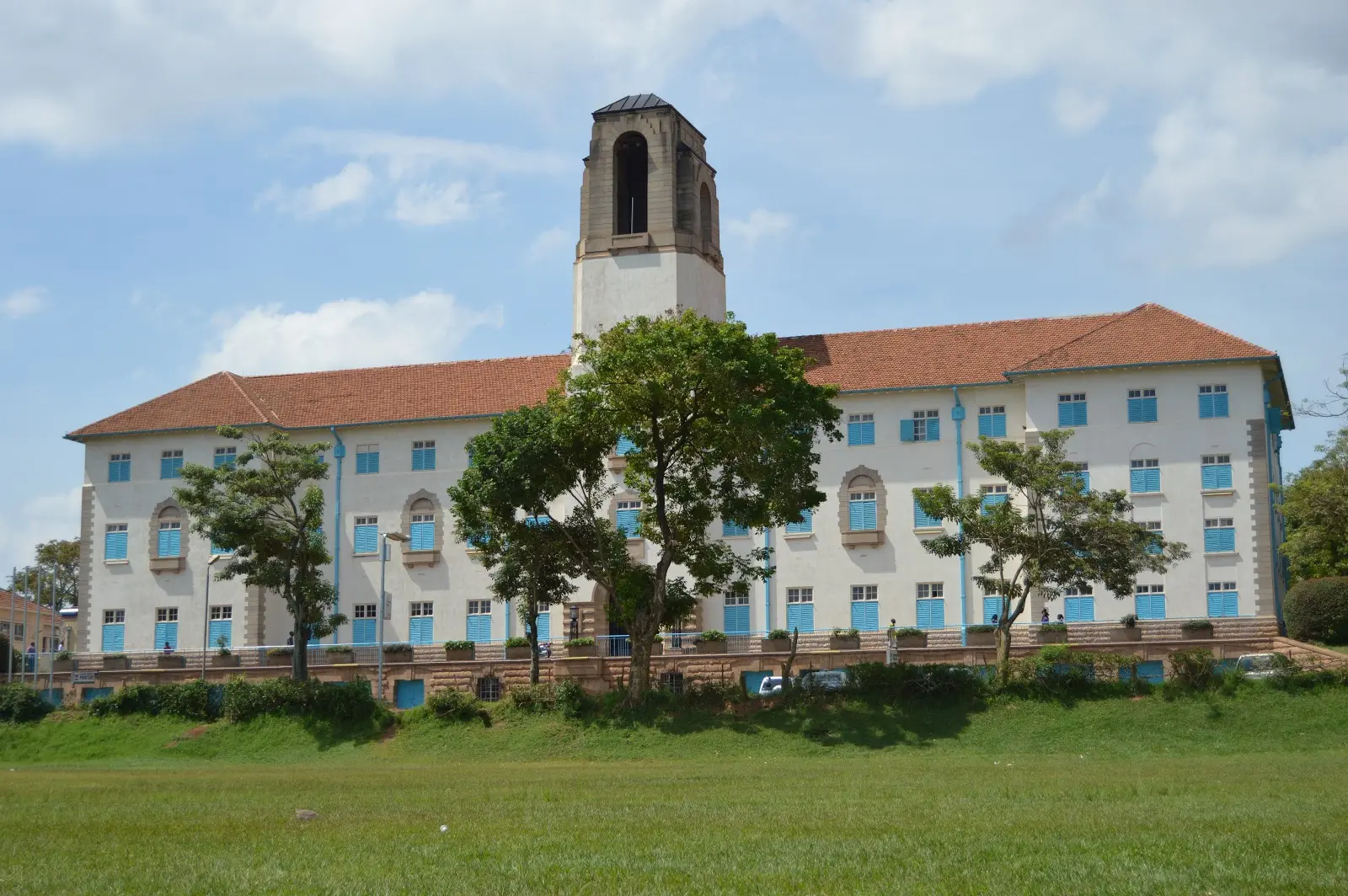
Prof. Alinaitwe was also team leader of the Makerere Main Building (Ivory Tower) redesign project, and has served on projects such as revamping the Uganda Railways system and port facilities, reconstructing the Kampala-Mbalala road, and tarmacking of the Kabale-Katuna road. He has been involved in evaluation of key infrastructure projects including the structural defects on the Karuma and Isimba hydropower dams, and technical evaluation of the Nakivubo Channel construction project, among others.

Prof Henry Alinaitwe with his Supervisor after a successful PhD Defence at Lund University in Sweden
He serves on a number of boards and councils, notably the Engineers Registration Board, Mulago National Referral Hospital, Kyogo Senior Secondary School, Uganda National Council for Science and Technology (UNCST), Makerere University Council, and is the newly-appointed chairman of the NWSC board. He has also previously served on the board for Kiira Motors Corporation.
This generation can achieve more
The DVCFA, whose office oversees the finances and administration of the university, is directly responsible for Makerere’s planning, budgeting and development. He opines that Makerere as the oldest institution with over 400,000 alumni, directly impacts Uganda's development.
“The capacity being built in the country, the advisories that we provide, and the people who go on to participate in different spheres of life, make it imperative that we do our level best at Makerere to continue developing the country and the region as a whole,” he says.
Prof. Alinaitwe is equally certain that Makerere students, as beneficiaries of its rich academic legacy, while on holiday or undertaking internship, wield sufficient capacity to make meaningful contributions to their communities back home. Prior to joining Makerere, he volunteered to teach mathematics and science (physics) in schools in Kabale during his O-Level and A-Level vacations. He recalls that some of the questions he set during mock exams went on to appear in the finals that year, which led to outstanding performance in those schools.

Prof. Henry Alinaitwe and his parents Mr. Ephraim and Mrs. Joy Mwanaki headed for a trip overseas.
He believes that the tens of thousands of Makerere students and alumni can have greater impact should they choose to be intentional in giving back to society in the areas of education, literacy campaigns, agriculture, village and town planning, infrastructure and other areas.
“Makerere’s human resources in the form of students and staff are at times not adequately utilized… and engaged. We can address issues in mass education, literacy and reorganization and community development,” he reasons.
He points to exploding urban centres, booming construction, need for good agricultural practices, customer care, public health, marketing of goods and services, and consultancies as some of the areas in which staff and students can share their expertise. This giving back, he opines, can help greatly minimise professional costs incurred by ministries and local governments.
In a nutshell, Prof. Alinaitwe believes that with hard work and the conscious decision to stay mentally and physically healthy, Ugandan youth can take advantage of their beautiful climate, emulate global success stories, and make calculated moves that can positively impact our society.