
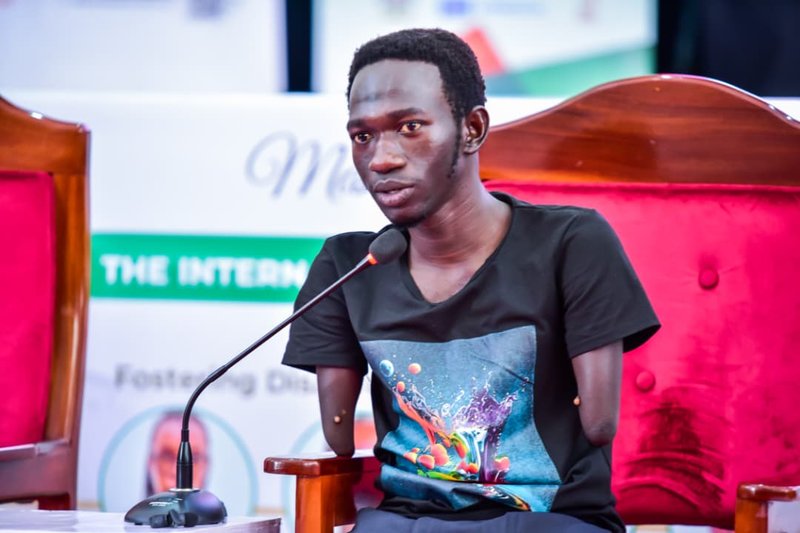
"Though I was born without hands, from childhood, I have always wanted to become an architect because building works fascinate me," Mungufeni says
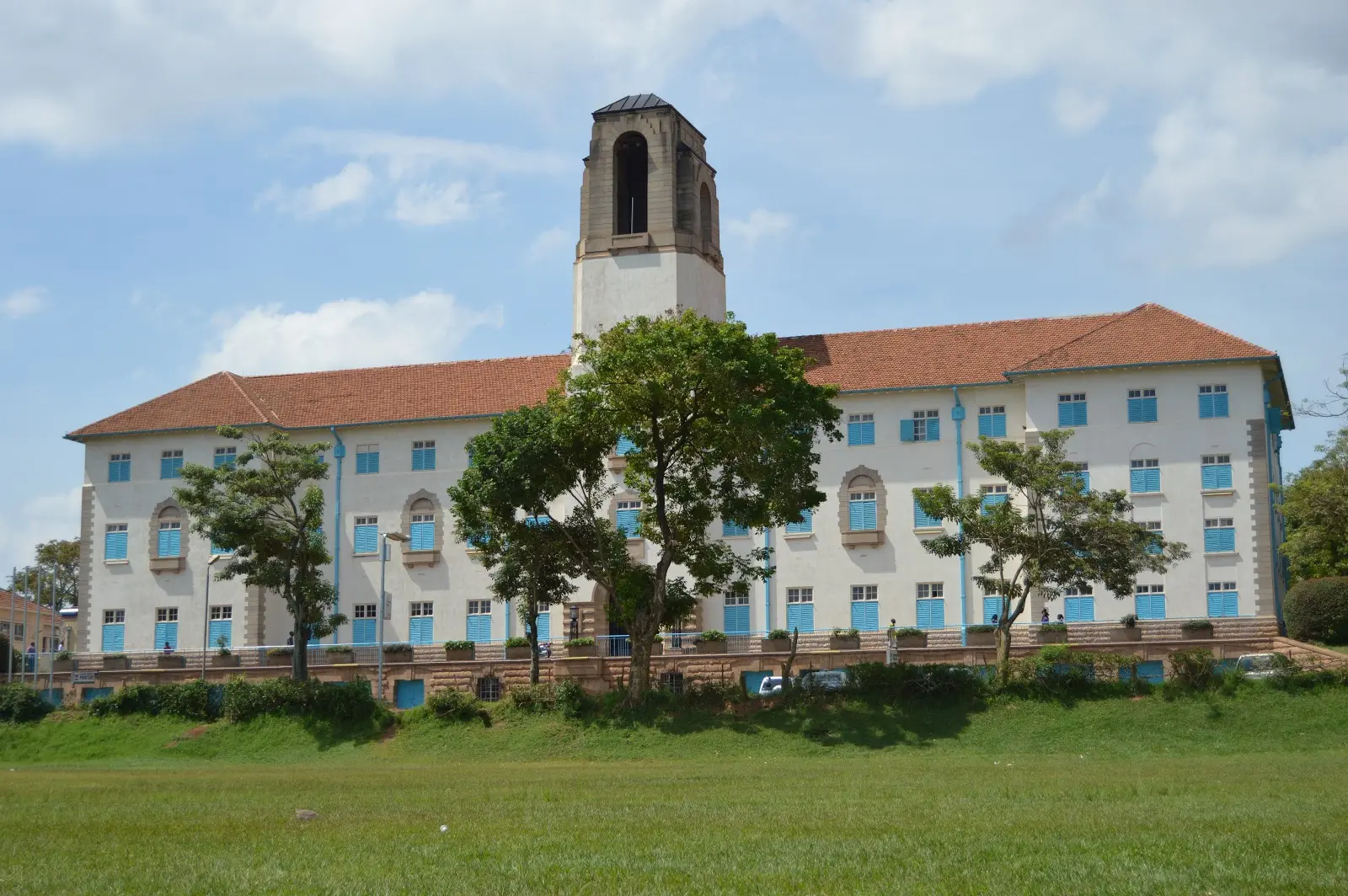
At the bustling studios of Makerere University where architecture students spend long hours sketching building plans, designing structures and crafting models, one student stands out, not because of what he lacks, but because of the determination he carries every day.
Sabiri Mungufeni, 22, a first-year student pursuing a Bachelor of Architecture (B. Arch) under the College of Engineering, Design, Arts and Technology, was born without hands.
For many people, such a condition would close doors before they even opened. Architecture, a course known for technical drawing, precision, creativity, and endless practical assignments, would seem almost impossible. But for Mungufeni, circumstances were never going to define his future.
“Though I was born without hands, from childhood, I have always wanted to become an architect because building works fascinate me,” he says.
So who is Mungufeni?
Born to the late Bruhana Angua and Zakia Aseru of Arua, Mungufeni is the last born in a family of seven children. He grew up at the Missionaries of the Poor orphanage in Mengo-Kisenyi, Kampala.
The Missionaries of the Poor have been active in Uganda since 2000, serving hundreds of vulnerable people, including children with disabilities, elderly persons, street children, and individuals with mental health challenges.
“I joined the orphanage when I was four years old, not because I was an orphan, but because my parents thought it was the best place for me to access better opportunities than in Arua,” Mungufeni explains.
He attended New Kabale Primary School in Busega, where he scored 11 aggregates in Primary Leaving Examinations. He later joined Namilyango High School for his O-Level studies and Aringa Secondary School for A-Level, where he obtained 14 points in Physics, Mathematics, Art and ICT.
The grades earned him admission to Makerere University to study Architecture under the Government sponsorship disability scheme.
Life at university
The journey to Makerere University has not been easy.
“When I was told I would be residing in Nsibirwa Hall, so many things started running through my mind, how I was going to survive with my limited resources and whether I would manage the course with my condition,” he recalls.
Mungufeni says he initially believed studying architecture would mainly involve computers. To his surprise, most coursework at the university is done manually.
“The hardest part has been making things using my arms because I am not used to it. I thought architecture was mainly computer-based, but I was surprised when I was told computers are mainly used in fourth year,” he says.
Despite the challenges, he has found support from friends and former high schoolmates who have helped him adjust to campus life. His classmates ensure he gets meals, while lecturers give him extra time during examinations.
“Sometimes the only time I get to have lunch is when our class representative orders food for me. I want to thank Noeline Asiimwe for always looking out for me,” he says with gratitude.
Movement across the hilly university campus remains one of his greatest struggles. Although Makerere recently received an electric bus to transport students with disabilities, accessibility challenges remain.

Mungufeni during the interview
“My College is far from my hall of residence. I often get to lecture rooms 30 minutes late because I cannot walk at other people’s pace. Because of the long distance, I sometimes miss meals. The physical strain has also affected my health,” Mungufeni notes.
Three weeks back, he could hardly walk because of the pain in his ligaments.
Mungufeni hopes that some well-wishers can support him with a power wheelchair to ease his movement.
Challenges for people living with disabilities
Beyond physical limitations, Mungufeni says many persons with disabilities still face stigma, exploitation and discrimination.
“Persons living with disabilities are still used and abused. I recall painful experiences from childhood when people would take pictures of me under the guise of helping me, only to use them for personal gain. I remember someone telling me I was capital for my family because of my disability,” he recalls.
He also remembers an incident during his Senior Six vacation when he visited an electronics shop to buy a phone battery. Instead of serving him, people began collecting coins, assuming he had come to beg.
“That happened twice, and I turned down the money because I am not a beggar, so I call upon persons with disabilities to always look smart in order not to be judged,” he says.
According to him, lack of awareness and understanding continues to affect children with disabilities, with some families hiding them instead of supporting them.
“People with disabilities are still stigmatised. Even at university, some people undermine us by calling us names. The language they use while addressing us is still a challenge,” he says.
Some interactions can also feel disrespectful.
“When I am walking with fellow students, some people touch my head because of my height. That gesture irritates me,” he adds.
Despite the challenges, Mungufeni praises Makerere University, the Mastercard Foundation Scholars Program and the Makerere University Endowment Fund for establishing and equipping the university Disability Support Center, a one-stop hub to provide learning equipment, counselling and accessibility support for students and staff with disabilities.
His message to students with disabilities
Mungufeni’s message to students with disabilities is one of resilience and participation.
“For students who have made it to university, do not continue looking down on yourselves. Work against the odds. Do not give excuses because of your disability. Participate in activities that positively impact students’ lives. You can become a safeguarding champion, counselling buddy, emerging leader, or even seek leadership positions,” he advises.

Mungufeni speaking as a panelist as Makerere commemorated the International Day of Persons with Disabilities in 2025
For those who have not had the opportunity to join university, he encourages entrepreneurship instead of begging on the streets.
“If you have been on the streets begging, you now have enough money to start a business. You can make rosaries, repair shoes, or make crafts. Bring a new face to persons living with disabilities,” he says.
Inspired by his own story, Mungufeni has established the Young Leopard Academy, a football initiative aimed at mentoring young people, advocating for the rights of persons with disabilities and challenging community perceptions.
“I opened a football academy for both girls and boys where mentors come to talk to them about staying in school, avoiding early sexual activities, and focusing on their future. In my home district of Arua, many boys drop out of school to sell petrol. This academy helps them develop their talent while staying in school,” he explains.
Back at the university, Mungufen is determined to pursue his course and excel in it. For him, architecture is more than a profession. It is proof that disability does not define destiny.